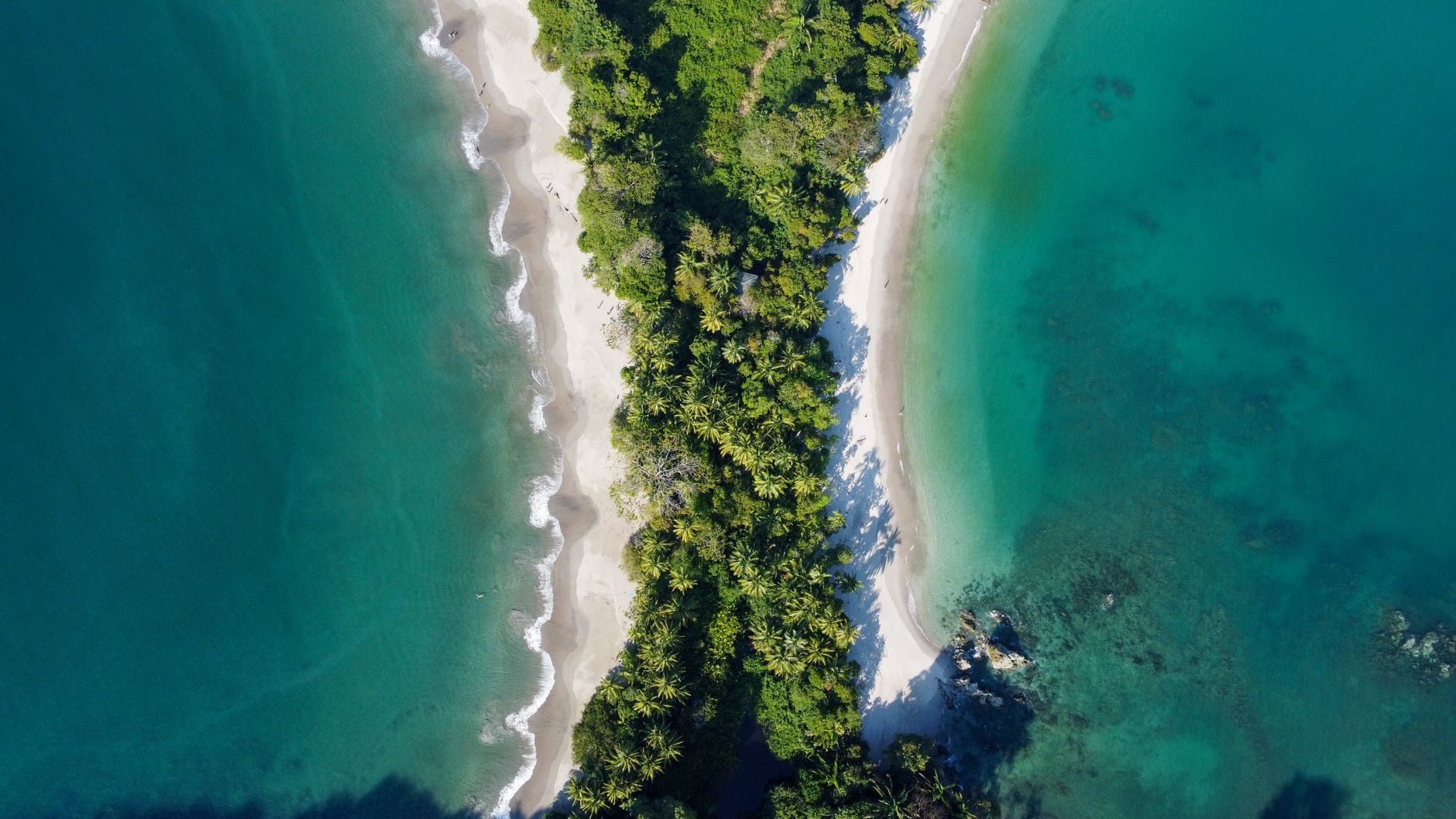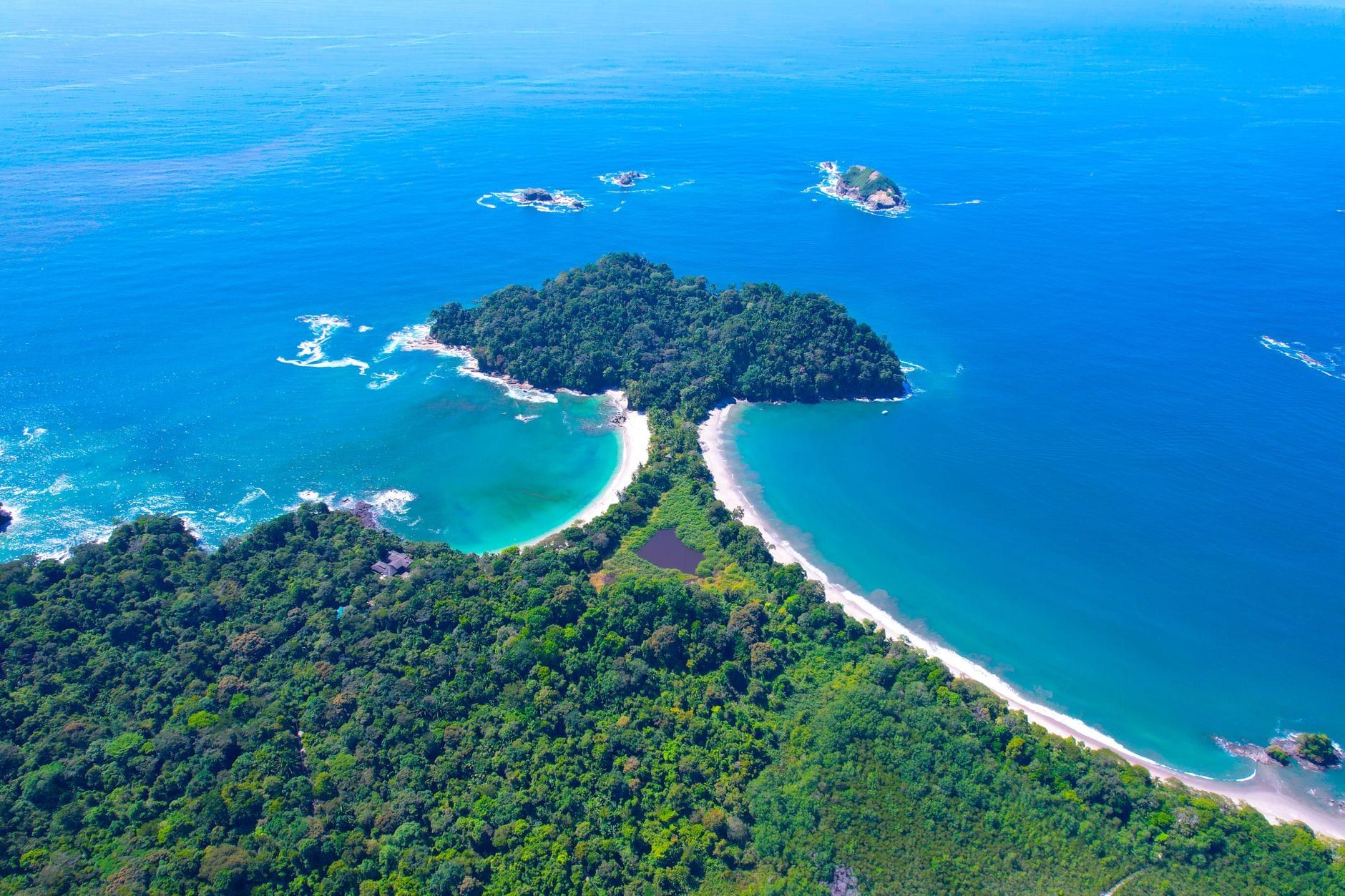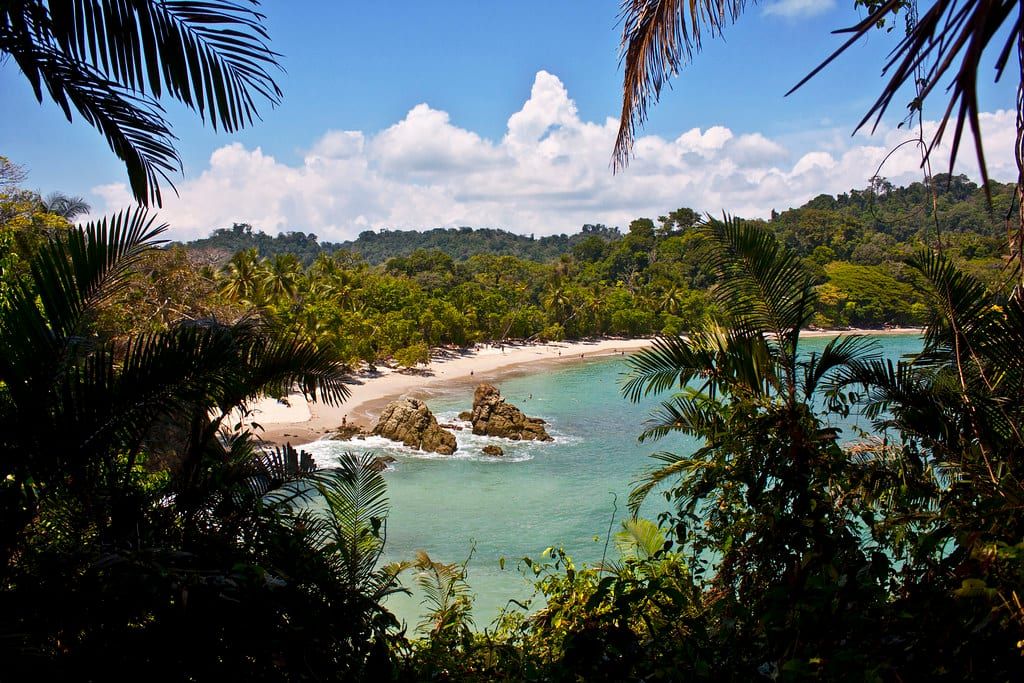
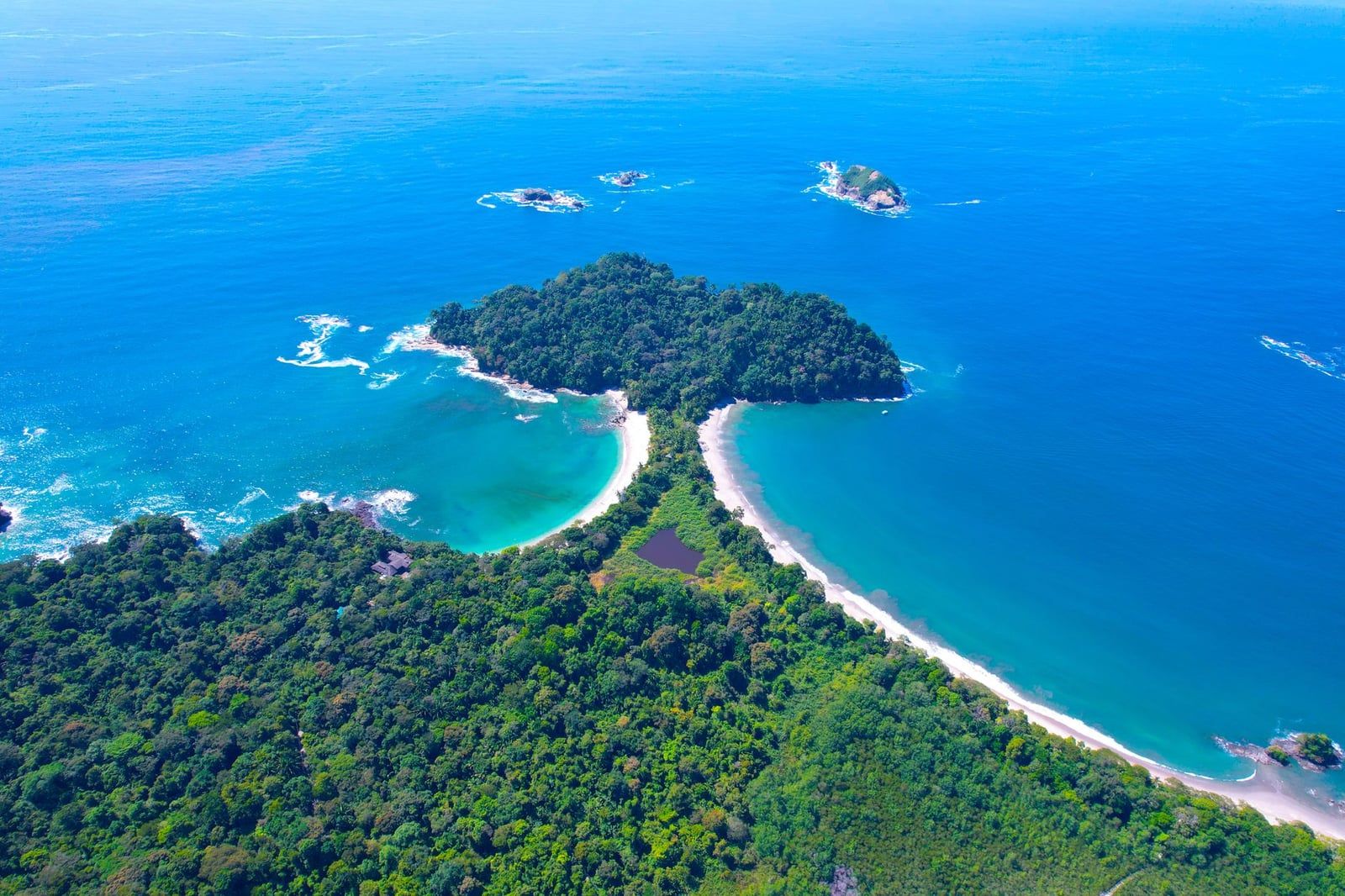
Manuel Antonio squeezes rainforest, four white-sand beaches and one of Costa Rica's densest wildlife concentrations into 1,983 hectares — the country's smallest national park and, by visitor count, its busiest. Sloths dangle over the paved main trail. Capuchins patrol the beach for unattended backpacks. The whole circuit takes a morning.
This guide covers what to actually do with your time: the park itself — tickets, guides, trails and beaches — followed by the mangroves, ziplines, night walks and day trips that fill out a two- or three-day stay.
Manuel Antonio National Park at a Glance
Worth it? Yes — with caveats about crowds and booking. Some 4.4 million people passed through the gates between 2012 and 2022, and since a May 2023 court order entry is capped at 1,120 visitors per day with 15-minute arrival slots. Dry-season slots sell out one to two weeks ahead, and months ahead at Christmas and Easter.
The essentials: the park is open Wednesday to Monday, 7 a.m. to 3 p.m., and closed every Tuesday — the single most common planning mistake in the area. Foreign adults pay $18.08 (children 2–12 pay $5.65, under-2s free), and everyone enters free on August 24, National Parks Day. Tickets exist only on SINAC's official portal, serviciosenlinea.sinac.go.cr, bought with passport details, six per transaction maximum. Bring the physical passport on the day; a phone photo won't pass the gate.
Bag checks at the entrance confiscate food, packaged snacks and single-use plastic bottles, so carry a reusable bottle — 1.5 L is right for the humidity — and use the refill fountains on the Sloth Trail and near the beaches. Drones, umbrellas, hammocks, speakers and beach balls are banned, and collecting shells is too. Eat a proper meal before you enter: the only food inside is a cafeteria (7:30 a.m.–3:30 p.m.) with long midday lines. For the full picture, see our guide to hours and entry fees.
Timing matters more here than at almost any park in Costa Rica. Take the 7 a.m. slot: wildlife is most active, the heat hasn't built, and the main beach fills up by 10. Dry season (December–April) brings sun and the biggest crowds; green season brings morning sun and afternoon rain, with September and October the wettest, muddiest months.
Spot Wildlife: Guided Walk vs. Going Solo
A guide is the difference between "nice forest" and eleven sloth sightings. The park records 109 mammal and 352 bird species, and three of Costa Rica's four monkeys live here: white-faced capuchins, mantled howlers and the endangered Central American squirrel monkey, which in this country survives only here and around Corcovado. Both sloth species, coatis, agoutis, green iguanas and basilisks round out the usual cast.
The catch is camouflage. A three-toed sloth at rest looks like a tan lump on a grey branch, and untrained visitors walk under a dozen of them without noticing. Certified guides from the Quepos association work at the entrance from 7 a.m. to 2 p.m., charging roughly $40–70 per person for a two-hour walk along the main trail; a private guide runs about $110 for two people. Every serious guide carries a spotting scope, and the trick that pays for itself: they clamp your smartphone to the eyepiece and shoot photos that outperform a consumer telephoto lens. You leave with frame-worthy sloth portraits without buying any camera gear.
Booked small-group wildlife tours online run the same format with hotel pickup, which is worth it in high season when entrance hiring gets competitive. For where to point your own eyes, our guide to sloths in Manuel Antonio National Park covers the trees and times that produce sightings.
Skip the guide only if the hike and the beach are the point of your day. The main trail is flat, paved and self-explanatory, monkeys announce themselves, and binoculars plus patience get you birds — the best window is 7 to 9 a.m. But if wildlife is why you came, and it usually is, budget for the guide.
Hike the Park's Trails
Roughly 8 km of trail cover the park, and two walks matter most. Sendero El Perezoso, the Sloth Trail, runs 1.1 km from the entrance — flat, paved, 20 to 30 minutes — through cecropia trees where both sloth species feed most reliably. It is the park's wheelchair- and stroller-friendly route, so it doubles as the accessible spine of a visit.
The Punta Catedral loop is the best independent add-on once most guided walks finish at the beach. It climbs 1.4 km around a former island now tied to the mainland by a sand spit, takes 45 to 60 minutes, and passes five viewpoints over offshore islands that host seabird rookeries. At low tide you can look down at La Trampa, a circle of pre-Columbian Quepoa stonework once used to trap fish and turtles. Some sections are steep and paved; closed shoes beat sandals.
Quieter options: the trail to Mirador Punta Serrucho crosses calmer forest to a saw-toothed rock formation sitting on a visible tectonic fault, and an elevated boardwalk loops 20–30 minutes through the park's 18-hectare mangrove of red, piñuela and caballero trees, with water birds best in the first hour of daylight. A small waterfall flows on its own trail, but only in the rainy season — don't chase it in February.
Beach Time Inside the Park
Four beaches sit inside the boundary, and Playa Manuel Antonio wins for swimming: an 800-metre crescent of white sand in a sheltered cove, calm enough for kids, with snorkelling along the rocky sides where coral and reef fish congregate. Showers and changing rooms sit behind the sand. It is also the busiest — arrive before 11 a.m. or share your towel with the crowd.
Playa Espadilla Sur is broader and quieter but has stronger surf; a lifeguard program operates, though rip currents occur on both main beaches, so keep children within reach. Playa Las Gemelas and Playa Escondido are the extra-walking, quieter picks, and Escondido's access trail is sometimes closed — check at the gate. Umbrellas and chairs aren't allowed anywhere in the park. For a beach-by-beach breakdown, see our guide to the park's beaches.
The park closes at 3 p.m., and the walk back to the entrance takes 20–30 minutes, partly uphill and hot by afternoon. Start moving at 2:30 and you'll exit with time to spare — and with the cafeteria's ice cream as your reward.
On the Water: Catamarans, Sea Kayaking & the Damas Mangroves
Once you've had your fill of the trails, the water takes over. Catamaran cruises, coastal kayaking and a mangrove estuary make up the region's on-water lineup, and each delivers wildlife the park can't — dolphins off the bow, crocodiles in the channels.
Catamaran cruise
Catamarans leave from Marina Pez Vela in Quepos, about 10 minutes from Manuel Antonio, for half-day trips with a snorkel stop and lunch on board. Bottlenose dolphins appear year-round, and humpback whales pass close to shore between August and November — a genuine bonus if you're visiting in green season. Most operators run a morning and a sunset departure; pick the sunset sail for the calmer seas and the coast at golden hour.
Sea kayaking to Playa Biesanz
Kayak rentals along the coast run about $20 per hour, and the standard paddle hugs the headland from Espadilla to Playa Biesanz with a snorkel stop in the sheltered bay. It's a self-powered way to see the park's cliffs from the water without a tour group's schedule.
Damas Island mangroves
The Isla Damas estuary, 20 minutes away at the mouth of the Paquita River, is one of Costa Rica's major mangrove systems. Tours run by kayak — the wildlife pick — or covered boat, better for limited mobility, on a half-day schedule timed to the tide. The cast differs from the park entirely: crocodiles, boas, anteaters, herons, kingfishers and the sloths that live in the mangrove canopy. Night versions exist if your evenings need filling.
One honest caveat on snorkelling: visibility around Manuel Antonio is unreliable, and trips oversell it. The dependable local spots are the rocky ends of Playa Manuel Antonio and Biesanz — our Manuel Antonio snorkelling guide explains why — while the region's genuinely good snorkelling is at Caño Island, covered below under day trips.
Adventure Activities: Ziplining, Rafting, ATVs & Parasailing
The area's adrenaline options all work as a half-day filler around the park's fixed 7 a.m.–3 p.m. hours. Ziplines are the default; rivers, quads and parasails fill the rest.
Ziplining
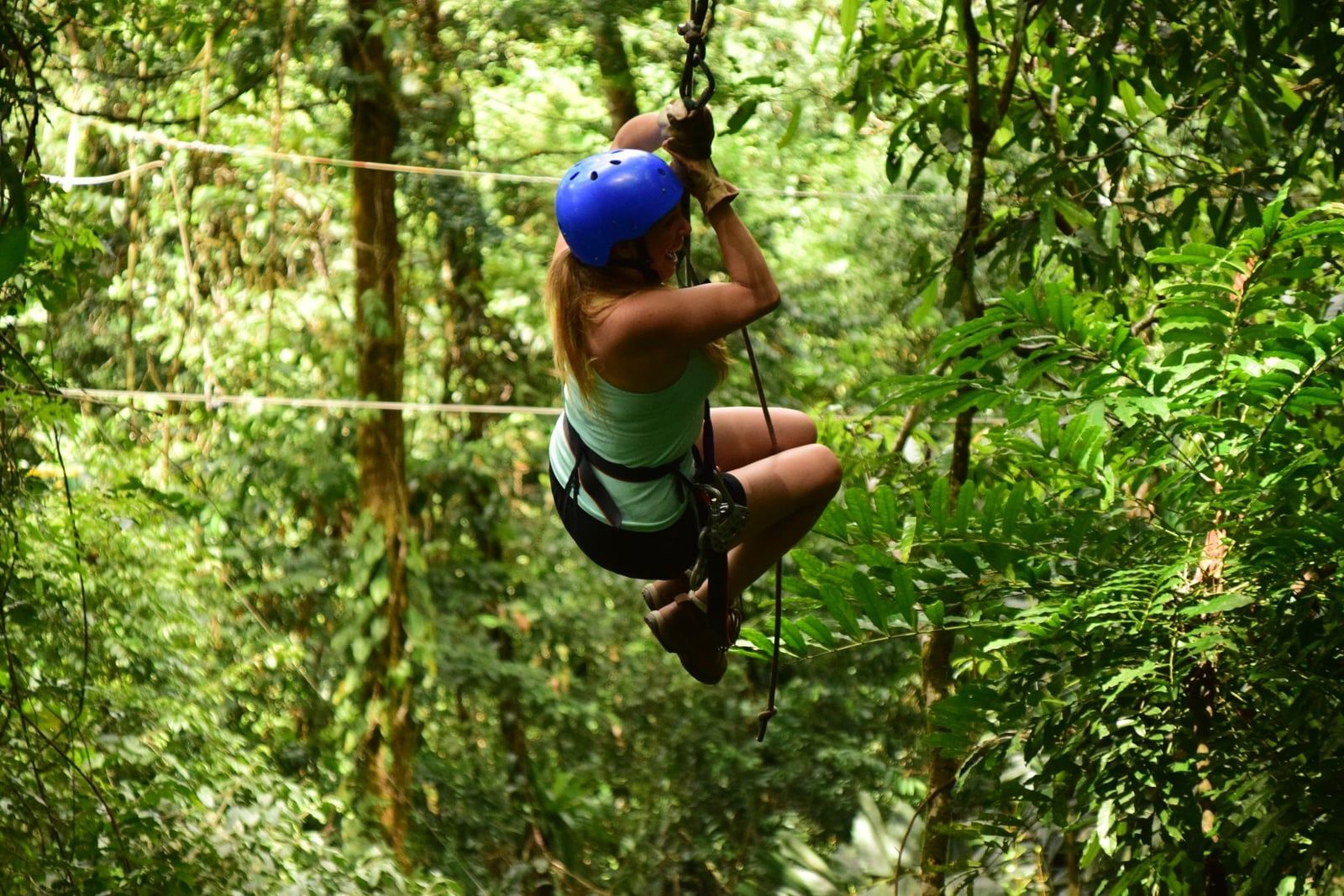
The local courses pack about 10 zipline lines plus suspension bridges, a rappel and a Tarzan swing into roughly two hours, hotel transport included. It's the area's default afternoon after a morning in the park, and the canopy views of the ocean are the payoff for the harness wedgie.
Whitewater rafting
Pick your river by season and stomach. The Savegre (Class II–III) runs year-round and suits beginners and families. The Naranjo runs June to November with punchier water, and El Chorro — March and April only — is for experienced rafters. All three are driven as day trips from Manuel Antonio with gear and guides included.
ATVs, parasailing and rappelling
ATV tours churn through jungle villages to waterfall swimming holes — loud and muddy in the best way. Parasailing launches off Playa Espadilla Norte in roughly 15-minute flights that give you the park's coastline from above; book ahead in high season. Waterfall rappelling is the biggest adrenaline hit on offer if you've already ticked the zipline.
Night Jungle Walks (and Rainmaker Park)
The park closes at 3 p.m., and night walks are the best answer to the empty evening. A standard tour starts around 6 p.m. with hotel pickup, lasts about two hours in a small group, and sends you home with the guide's photos — they shoot everything through their own lights and share the files after.
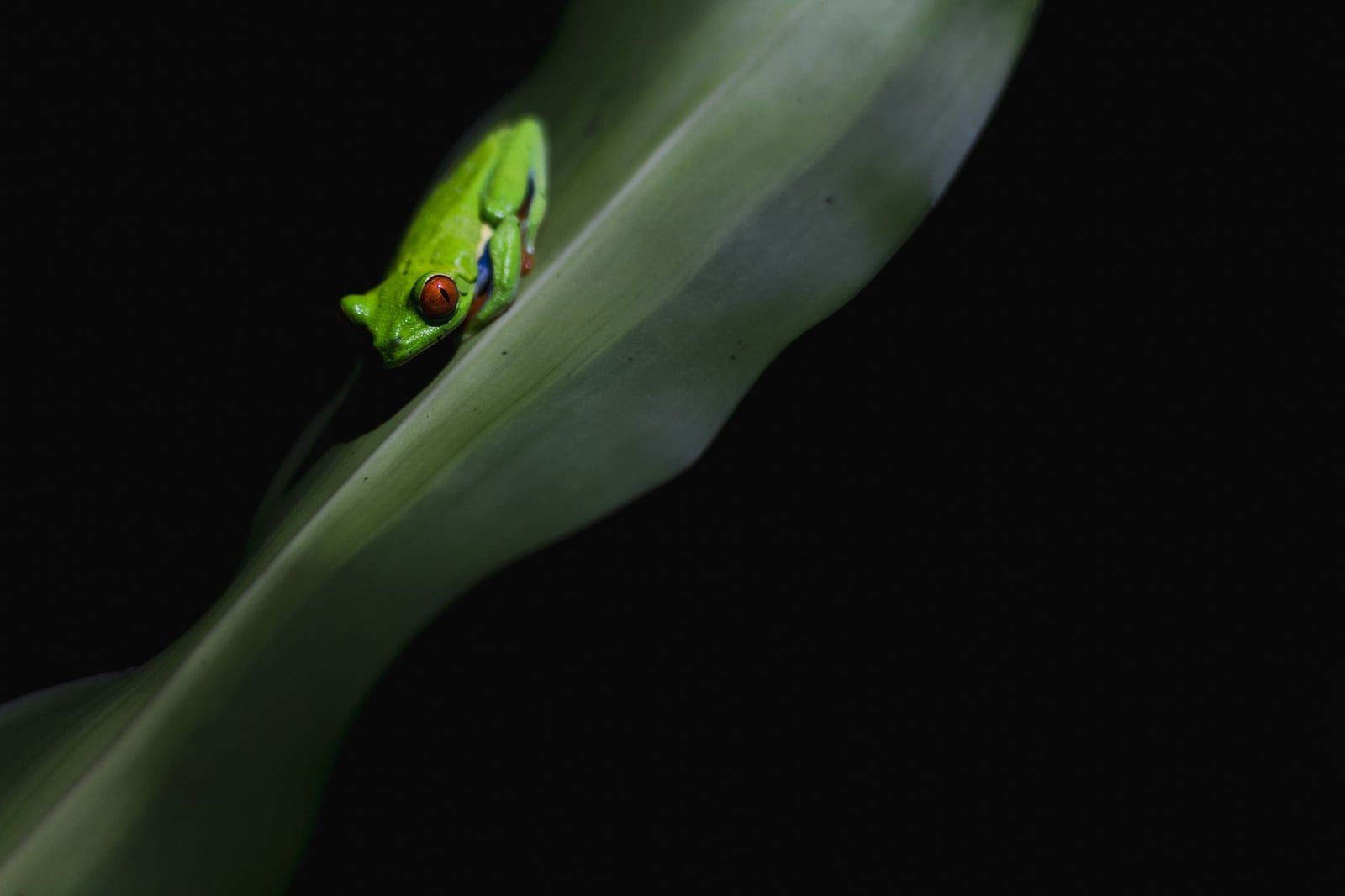
The cast changes completely after dark: red-eyed tree frogs, glass frogs, vipers, tarantulas, scorpions, kinkajous, and birds and sloths asleep in the open. Book through a night tour operator in Quepos or Manuel Antonio; groups stay small by design.
Rainmaker Conservation Park, 25 km and about 37 minutes away in the Fila Chonta foothills, runs its own 2–2.5 hour night walks, plus hanging bridges through the canopy and waterfall pools by day — a family-friendly, lower-crowd alternative to the national park's daytime circuit. One insider option: the national park itself offers night tours at 5:30 p.m. Wednesday to Friday from November to April, with limited slots.
Beaches, Surf & Sunsets Outside the Park
Days you're not inside the park need no ticket at all. The public beaches around the village cover swimming, surf lessons and sunsets, free of charge.
Playa Espadilla Norte
Espadilla Norte is the main public beach — free, long, and fronting the village, which makes it the sunset stroll of choice and the launch pad for parasailing and surf lessons. One caution: the freshwater brook at its southern end carries crocodile warning signs. Admire it from the sand; don't swim near it.
Playa Biesanz
Biesanz is the calm-water pick for families, a sheltered bay on Quepos Point reached by a short, slippery forest path near the Parador resort turnoff. Time it right — the shore nearly disappears at high tide. Kayak rentals sit on the sand at about $20 per hour, and the bay fills with local families on holidays.
Surf lessons and sunset drinks
A two-hour surf lesson averages about $65. The protected coves keep the northwest swell small and beginner-friendly, and the water is warm enough to skip a wetsuit entirely. For sunset, trade the beach for the mirador bars up the hill road — El Avión, Agua Azul and Emilio's all look down over the coastline with a drink in hand.
Best Day Trips from Manuel Antonio
Four trips justify the drive out of town, led by a waterfall you can swim under. All four work in dry season; two of them work in any weather.
Nauyaca Waterfalls
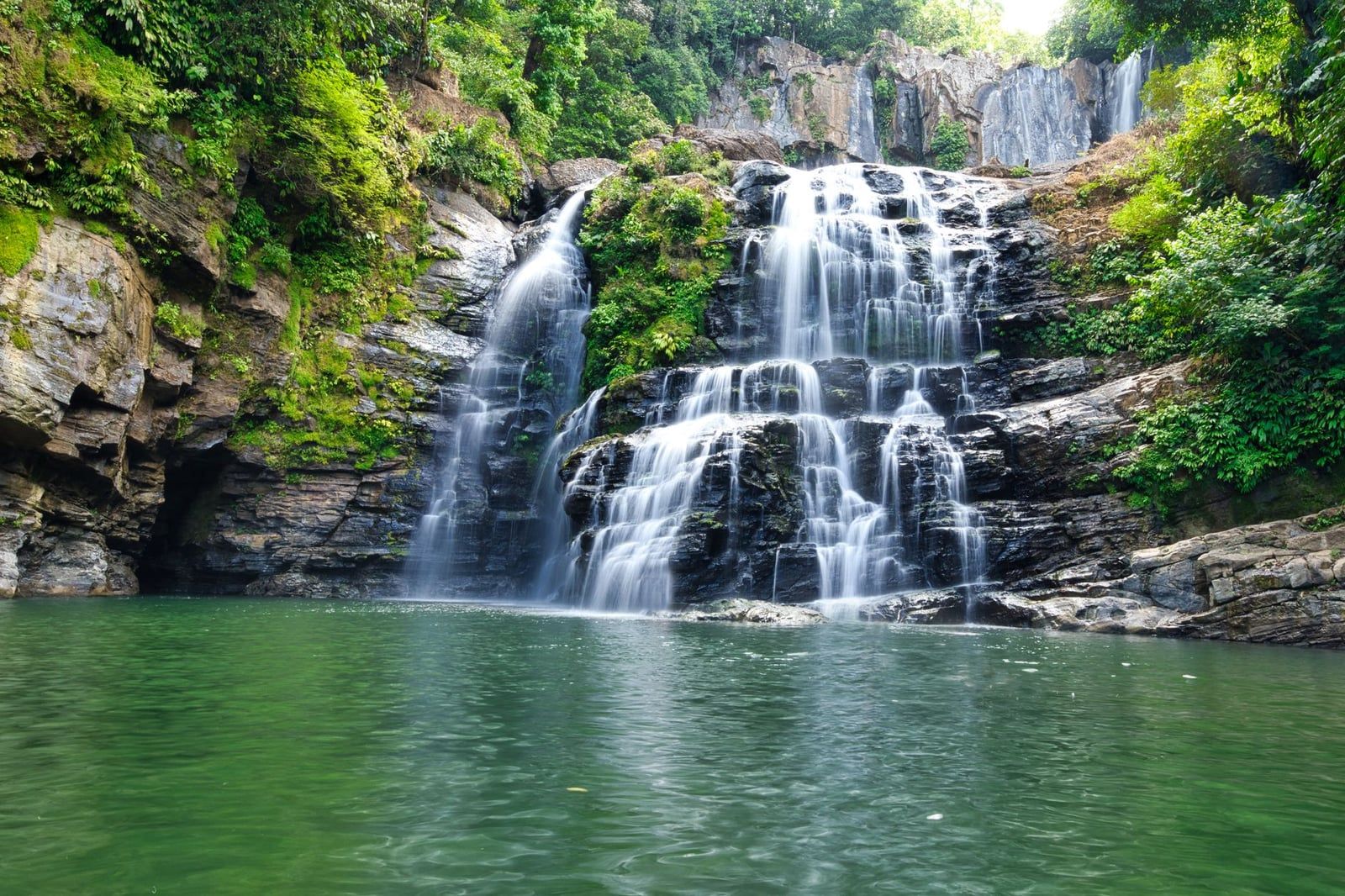
Nauyaca is the day trip worth giving up a beach day for: a two-tier cascade with swim pools, about an hour's drive (54 km) from Manuel Antonio, reached through two private entrances. The round-trip 4x4 shuttle costs $38 per person, the last shuttle down leaves at 2:30 p.m., and pickup is required by 4 p.m. Walking instead saves $5 and makes it an 8 km round-trip hike — do that only in dry conditions.
Uvita and Marino Ballena
About an hour south, Uvita and Marino Ballena National Park are the region's dedicated whale-watching base, with humpbacks peaking August to November. Boat tours run half-days out of the Uvita beachfront.
Caño Island and Los Campesinos
Caño Island, a full-day boat trip out of Uvita, is where the region's genuinely good snorkelling lives — clear water and reef fish that Manuel Antonio's murky bays can't match. Closer to home, Los Campesinos Reserve sits 30–40 minutes from Quepos: a community-run project with hanging bridges, waterfalls, a natural swimming pool and a typical Costa Rican lunch, with revenue going to local families. It sees a fraction of the park's crowds.
Putting It All Together: Days, a Sample Park Day & Logistics
Two to three full days is the minimum to do the park properly plus a couple of area activities; three to four nights lets you cover the best of the region without rushing. Fewer, and you'll be choosing between the mangroves and the waterfalls on a coin flip. If you want help assembling it, compare Manuel Antonio tours across every category above.
The perfect park day, hour by hour:
- 7:00 a.m. — take the first entry slot; wildlife is active and the trails are empty.
- 7:00–9:30 — guided walk on the Sloth Trail with the scope-and-smartphone photography.
- 9:30–10:30 — Punta Catedral loop before the viewpoints fill up.
- 10:30–11:30 — cafeteria lunch, the only food inside the park.
- 11:30–2:15 — swim at Playa Manuel Antonio.
- 2:30 — start the 20–30 minute walk out; the park closes at 3 p.m.
| Item | Cost |
|---|---|
| Park ticket (foreign adult, IVA incl.) | $18.08 |
| Certified guide at the entrance | $40–70 |
| Private parking near the gate | ₡3,000–5,000 (~$6–10) |
| Quepos–park local bus instead | ₡315 (~$0.50) |
Getting there: Manuel Antonio is 157 km from San José — about 3.5 hours by car, or the direct Tracopa bus from Plaza Víquez at roughly $9, departing about hourly. A 25-minute flight to Quepos runs $75–100 one way, and shared shuttles start at $65. From Quepos, local buses run to the park entrance every 15–30 minutes. Full routes and timetables are in our directions guide.
Driving? There is no official park parking. Ignore "official parking" touts and yellow-vested flaggers on Route 618 and drive to the paid private lots at the end of the road near the entrance, where ₡3,000–5,000 buys the day. Base yourself in Quepos for value and transport links, in Manuel Antonio village for hillside views, or at the end of the park road if you want to walk to the gate.
Frequently asked questions
How many days do you need in Manuel Antonio?
Two to three full days minimum: one full day for the park itself, one for adventures like rafting or the Damas mangroves plus a night walk, and optionally a day for Nauyaca Waterfalls. Three to four nights covers the best of the area without rushing.
Can you bring food into Manuel Antonio National Park?
No. Food and packaged snacks are prohibited and bags are searched at the entrance; single-use plastics are banned too, though water in a reusable bottle is fine. The only food inside is the park cafeteria (7:30 a.m.–3:30 p.m.), which draws long midday lines — eat a big meal before you enter.
Do you need a guide at Manuel Antonio National Park?
Not required, but strongly recommended. Sloths and many birds are nearly invisible to untrained eyes, and certified guides with spotting scopes cost roughly $40–70 per person for a two-hour walk — they'll even photograph animals through the scope with your phone. Self-guided is fine if you only care about hiking and beach time.
When should you buy tickets for Manuel Antonio National Park?
As soon as you know your dates. Entry is capped at 1,120 people per day with timed slots, sold only on SINAC's official portal — dry-season slots sell out one to two weeks ahead, and Christmas and Easter weeks months ahead. There is no ticket booth at the entrance.
What time should you arrive at Manuel Antonio National Park?
Take the 7 a.m. opening slot. Wildlife is most active, temperatures are coolest, and the main beach fills by 10 a.m. The park closes at 3 p.m., so an early start is the only way to fit trails, a guided walk and a swim into one visit.
Is Manuel Antonio National Park worth it?
Yes — it pairs easy wildlife watching (three monkey species, both sloths) with genuinely swimmable beaches in a compact, accessible park. Go early with a guide, book tickets ahead, and expect crowds in dry season.
Can you swim at the beaches inside Manuel Antonio National Park?
Yes. Playa Manuel Antonio is the calmest and best for swimming and snorkelling; Playa Espadilla Sur is broader but has stronger surf and occasional rip currents. Lifeguards operate, and the park closes at 3 p.m.
How do you get to Manuel Antonio National Park from Quepos or San José?
Local buses run from Quepos to the park entrance every 15–30 minutes (₡315). San José is about 3.5 hours away by car, by direct Tracopa bus (roughly $9), or by a 25-minute flight to Quepos ($75–100). Drivers should ignore parking touts on Route 618 and use the paid lots at the end of the road near the entrance.