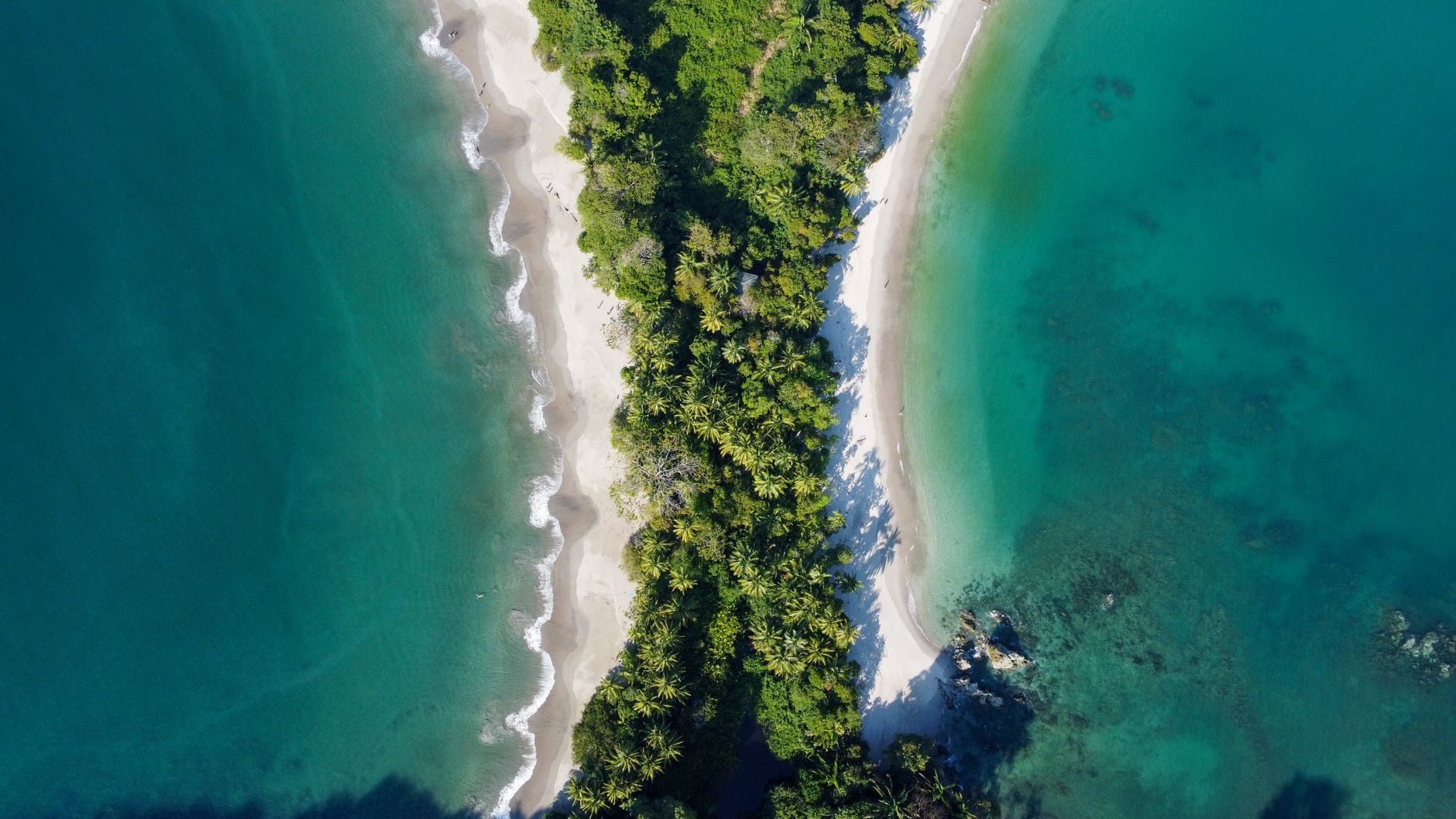
In most national parks, wildlife is a matter of luck. At Manuel Antonio, on Costa Rica's central Pacific coast, it's close to routine: three monkey species, both of the country's sloth species, and iguanas the length of your forearm, all within a morning's walk. The park crams 109 mammal species and 184 recorded birds into 1,983 hectares — one of the smallest parks in the country — and that density is exactly why the animals are so easy to find. Here's what you'll actually see, where, and how to raise your odds.
Why Manuel Antonio Is One of Costa Rica's Best Wildlife Parks
The math explains everything: a huge number of animals in very little space. Manuel Antonio protects just 1,983 hectares of land (7.66 square miles) plus 25,634 hectares of ocean and twelve small islands, yet SINAC — the national park system — counts 109 mammal species and 352 bird species for the park. It drew nearly 4.4 million visitors between 2012 and 2022, more than any other park in Costa Rica, largely on the strength of its wildlife.
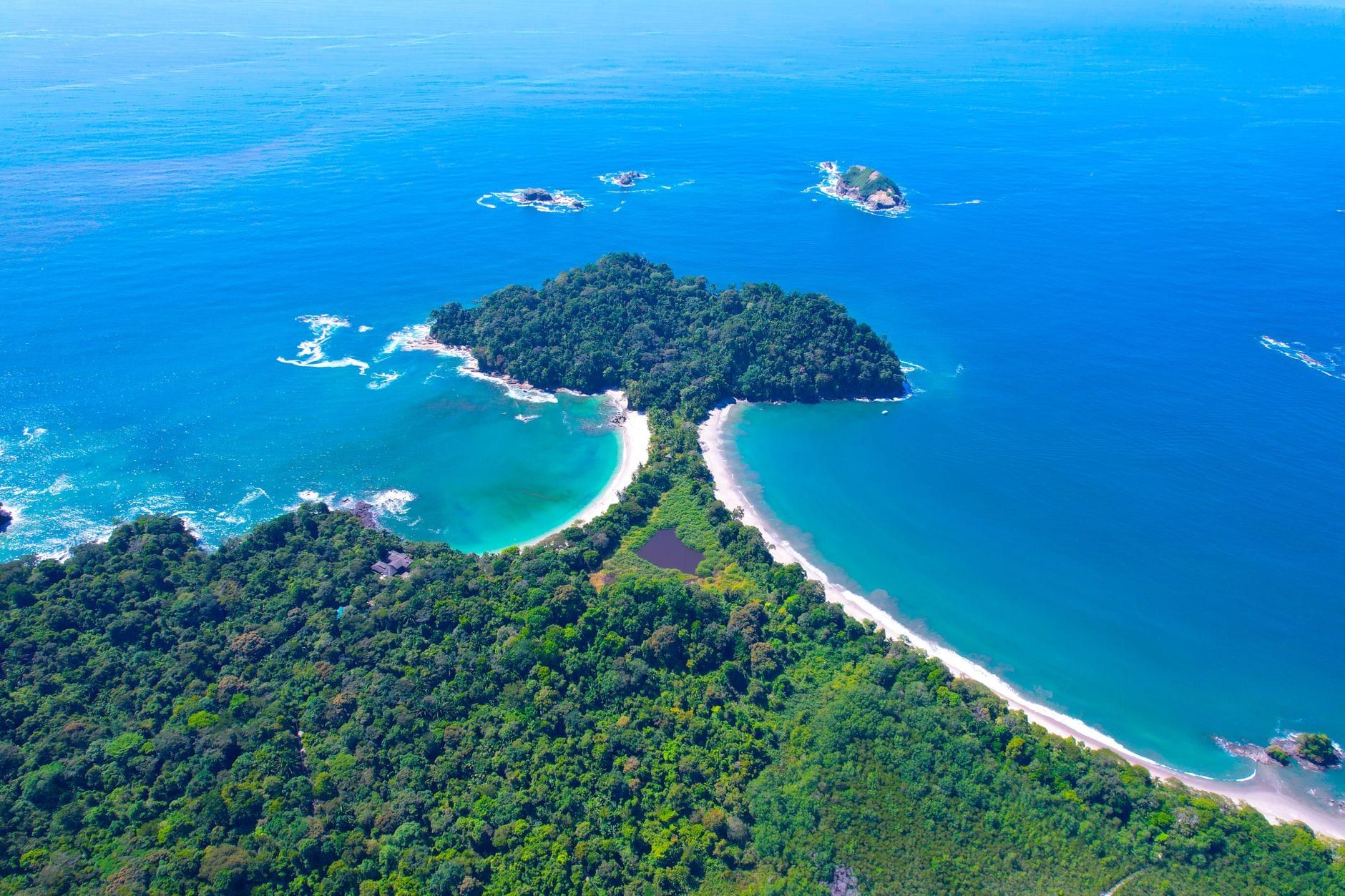
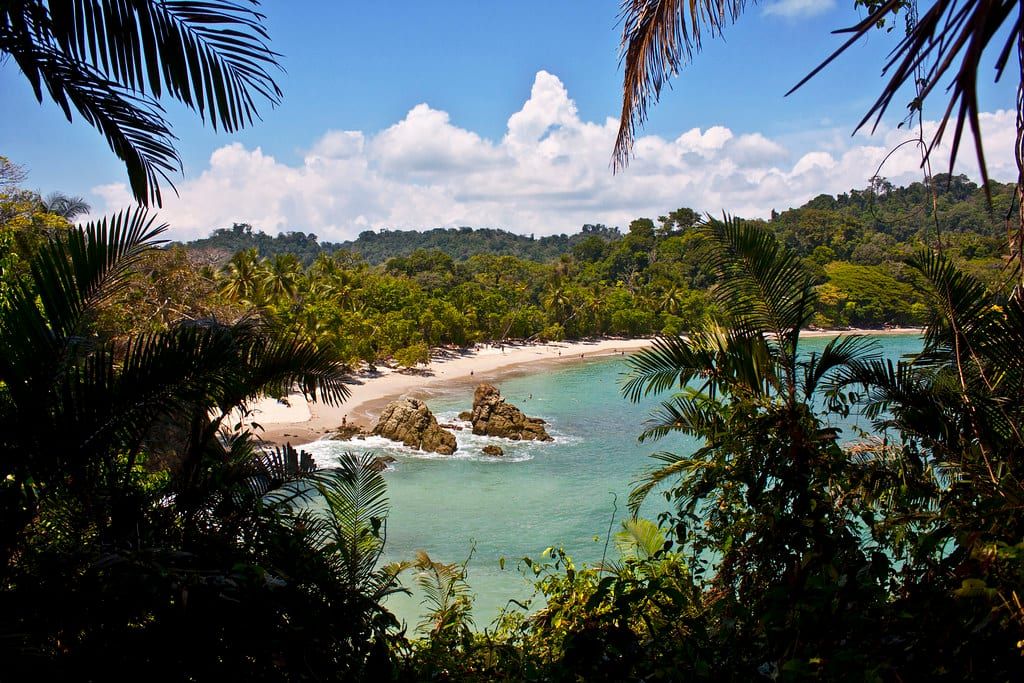
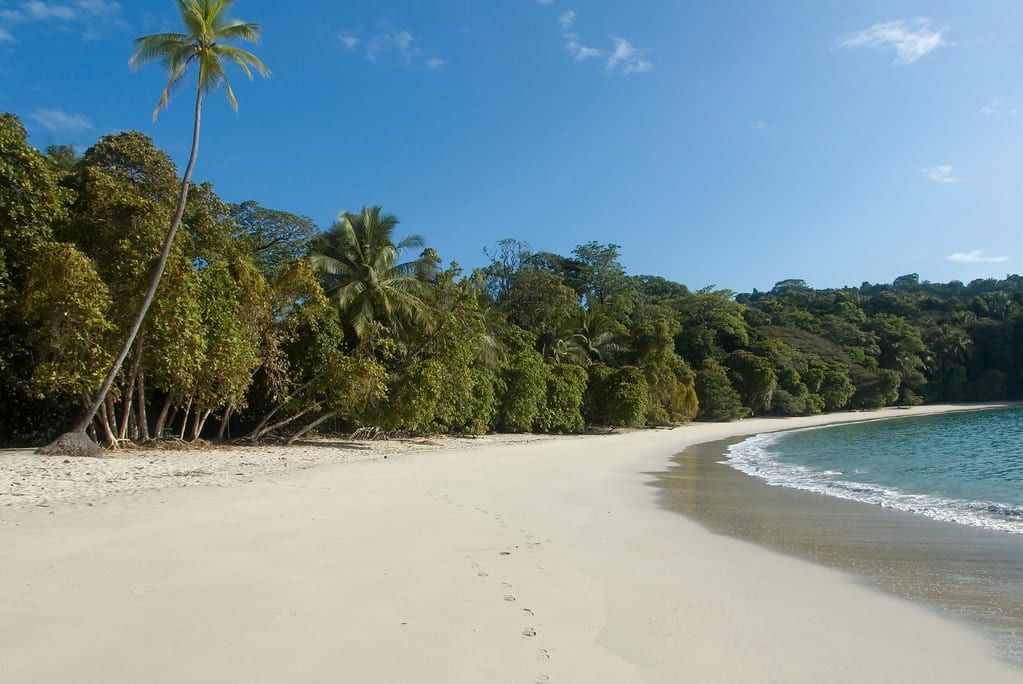
The habitat changes fast, which concentrates the animals. In one morning you walk from rainforest through an 18-hectare mangrove and past a 14-hectare lagoon before reaching four white-sand beaches. Species that would be scattered across separate reserves elsewhere here share one small map, so a single trail can pass through four ecosystems.
The wildlife is also used to people. Capuchin troops work the beach edges within meters of sunbathers, and sloths doze in trees beside the main path. Nobody touches — it's prohibited — but the animals no longer scatter at footsteps, and a tripod-legged iguana on the boardwalk will barely open an eye for you.
Logistics are easy too. The trail network runs about 8.3 km (5 miles), and the first stretch from the entrance is a flat, wheelchair-accessible boardwalk; the paved Sendero El Perezoso covers 1.1 km in 20–30 minutes. You don't need to be a hiker to see the park's animals. For background on how this small park came to be, see the park's history and visitor info.
Wildlife at a Glance: What You're Actually Likely to See
Some articles promise everything — four monkey species, quetzals, tapirs. Here's the honest tiering, based on what most visitors actually report, with trail callouts that recur throughout this guide.
| Odds | Species | Where and when |
|---|---|---|
| Near-certain | Capuchin and howler monkeys, iguanas, basilisks, agoutis, Halloween crabs, pelicans, frigatebirds | All day, anywhere in the park; capuchins thickest around the beaches |
| Good odds (better with a guide) | Both sloth species, squirrel monkeys, toucans and aracaris, coatis, raccoons, white-tailed deer | Sloth and Manglar trails in the first hours after the 7 a.m. opening |
| Lucky | Poison dart and red-eyed tree frogs, snakes, crocodiles and caimans, kinkajous, silky anteaters | Wet-season months, night walks, quieter forest stretches |
No tier is a promise. These are wild animals — even dedicated sloth-seekers strike out some days, and a frogless dry week is normal. What the tiers tell you is where to spend your attention: don't burn your best morning hours hunting an eyelash viper, and don't sprint past the capuchins because they're common.
Monkeys: Capuchins, Howlers, Squirrel Monkeys — and the Spider Monkey Myth
Three of Costa Rica's four monkey species live here, and two of them you'll see without trying. For deeper profiles of each species, see our guide to the park's monkeys; the essentials are below.
White-Faced Capuchins
Capuchins are the ones you'll remember — bold, quick, and permanently on the lookout for an unzipped bag. Troops patrol the beach edges and the entrance area, cracking fruit and investigating everything. They can open a backpack in seconds, so keep yours zipped and on your body, and eat only inside the designated cafeteria area. Feeding them, however cute the moment, is what turned them into thieves in the first place.
Mantled Howlers
You'll usually hear howlers long before you see them. Their dawn and dusk roars carry for miles through the canopy — a sound like distant engines — and they're the park's largest monkeys at around 9 kg (20 lb). Leaf-eaters, they spend most of the day draped over branches in the canopy, so scan the treetops and follow your ears. Mornings are the reliable window.
Central American Squirrel Monkeys (Mono Tití)
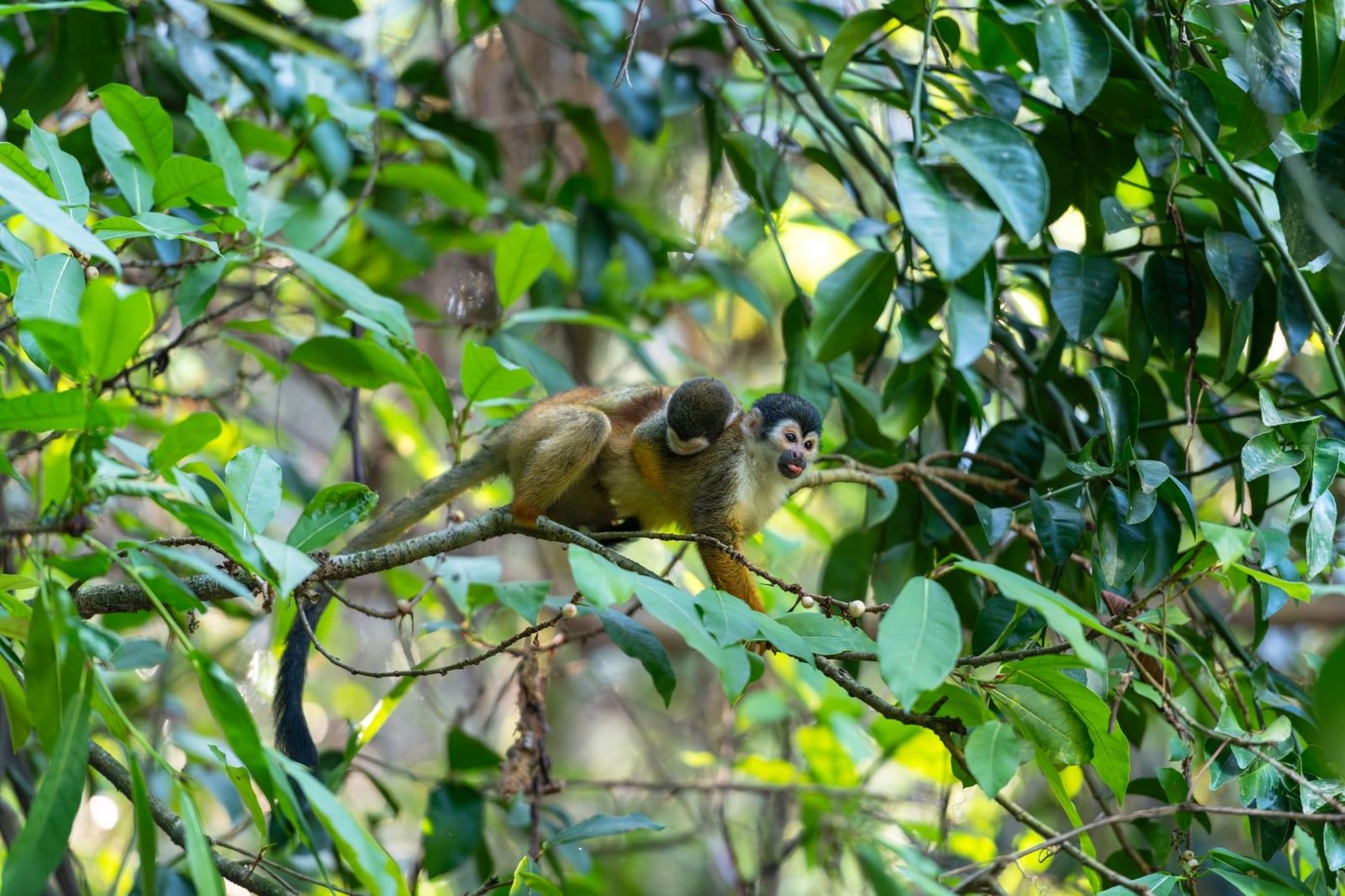
The squirrel monkey is the park's emblem and its rarest primate. This endangered subspecies lives only in the Manuel Antonio region — roughly 1,500 individuals at the most recent census — and travels in small family troops through the middle canopy, announcing itself with squeaky, birdlike calls. Your best bets are the Manglar, Sloth, and Puerto Escondido trails, early. Troops move fast, so when a guide's radio crackles, go.
The Spider Monkey Myth
Spider monkeys appear on some species lists for the park, and some tour-seller articles claim you'll readily see all four Costa Rican monkeys here. You won't. Spider monkeys stay in the remote sections if they're present at all, and regular visitors essentially never report them — Corcovado and Tortuguero are the reliable parks. Treat any itinerary that also promises resplendent quetzals (a cloud-forest bird) with the same skepticism.
Sloths: The Park's Most Wanted Animal
More visitors come for sloths than for anything else, and the park delivers — for people who know what to scan. Both species live here; our dedicated sloth guide goes deeper, but this is what matters on the trail.
Brown-Throated Three-Toed Sloth
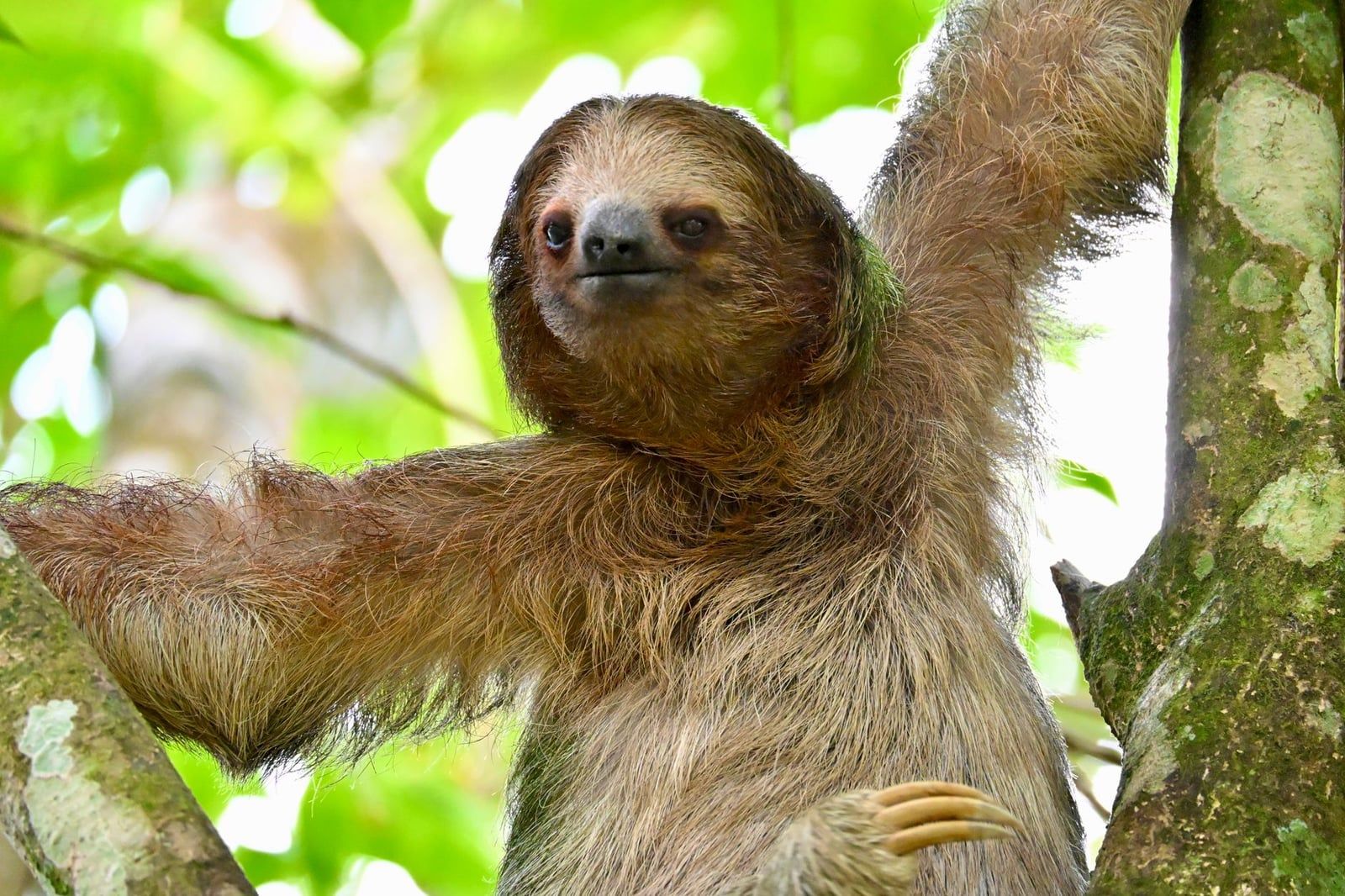
This is the classic sloth — grayish fur with a green tinge from the algae growing in it, a black eye mask, and a fixed, faintly smiling expression. It's the species you're most likely to see by day, hanging nearly motionless in the canopy. Scan cecropia (guarumo) trees first: their open, sparse branches are a favorite sloth perch and, conveniently, easy to search with binoculars.
Hoffmann's Two-Toed Sloth
Paler fur, a pinkish face, and a nocturnal schedule — the two-toed sloth is the harder find on a daytime visit. Occasionally one turns up in beach-edge trees, where the sea breeze keeps the canopy comfortable, or on a guided night walk when it's actually moving. Same rule as always: look for a lump that doesn't match the branch.
How to Actually Find One
Solo sloth-spotting is genuinely hard, and it's worth knowing why before you blame your eyes. Sloths sleep up to 20 hours a day, sit at canopy height, and their algae-tinted fur is superb camouflage against leaves. The productive spots are the Sloth Trail (El Perezoso) — flat, paved, lined with cecropias — plus the Manglar Trail and the route out to Playa Manuel Antonio. A guide's spotting scope is the difference-maker: they'll find the animal, lock the scope, and let you take a phone photo through the eyepiece. Self-guided, budget an hour of slow scanning and consider it a good morning if you find one on your own.
Other Mammals & Night Wildlife
Beyond the primates, the park's mammals split into a daytime floor crew and a nocturnal shift most visitors never meet. Here's who's who — and who isn't here at all.
Daytime: Coatis, Agoutis, Deer
The forest floor cast is steady. White-nosed coatis patrol in bands — females and young in groups with tails held straight up, mature males solo — snuffling through leaf litter along the trails. Agoutis, cat-sized rodents, freeze at trail edges before bolting. Raccoons work the beaches with the capuchins. White-tailed deer appear quietly in the early morning beneath the Manglar Trail and along the access road, easy to miss because everyone's looking up.
After Dark: Kinkajous, Bats and Night Walks
The day shift sleeps through half the species list. Kinkajous, olingos, silky anteaters and fruit bats all move at night, and two-toed sloths only get busy after dark. Guided night walks near Manuel Antonio turn up all of these; SINAC also runs its own evening tours inside the park (5:30 p.m., Wednesday–Friday, November to April) — the only way to see the park's forest after hours. Bring a flashlight with a red filter if you have one, and expect the guide to find frogs and snakes by checking the same leaves every night.
What You Won't See Here
No tapirs, no peccaries, and realistically no giant anteaters — the park is too small and too visited for the big, shy ground mammals. Corcovado National Park, on the Osa Peninsula, is where those live. Planning your Manuel Antonio expectations around what's actually present beats a wish-list day.
Birds, Seabirds & Marine Life
Manuel Antonio is better birding than its size suggests, and the sea adds a layer most forest parks can't match. Birders count well over 100 species in a good morning here; everyone else gets toucans without trying.
Land Birds
Yellow-throated toucans and fiery-billed aracaris are the two most-seen big bills. Scarlet macaws, trogons, tanagers, motmots and hummingbirds (including the locally notable mangrove hummingbird) all occur, along with the black-hooded antshrike, a regional specialty birders fly in for. SINAC counts 352 species for the park — Wikipedia's stricter count for the park proper is 184 — but either figure is remarkable for 7.66 square miles. The prime window is 7 to 9 a.m.; move quietly, and a dedicated birding tour roughly doubles the species count for casual lists.
Seabirds at Punta Catedral
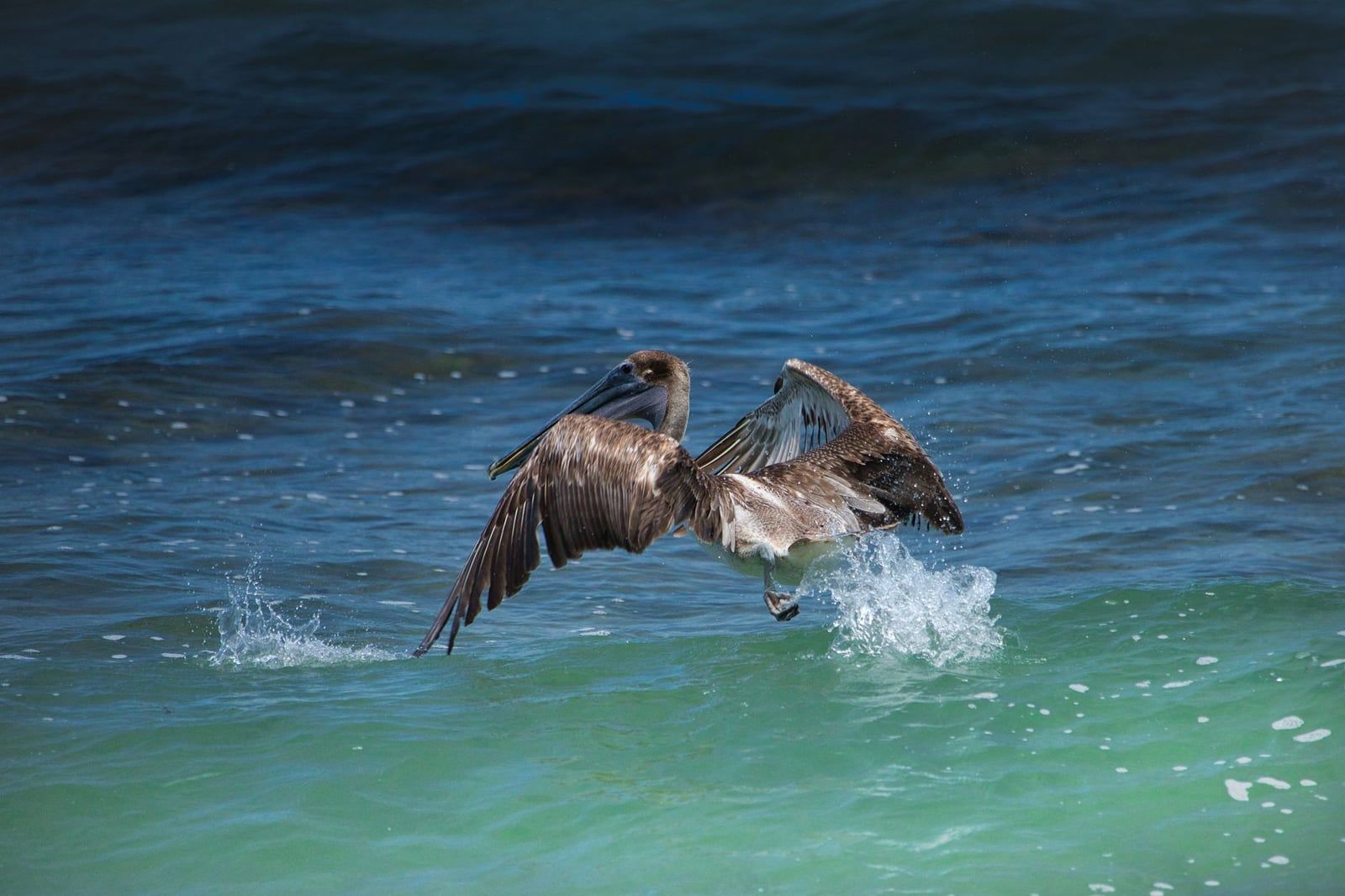
The 1.4 km Punta Catedral loop climbs to five viewpoints over offshore islands, several of them seabird rookeries. Magnificent frigatebirds hang overhead like pterodactyls, brown pelicans dive in long lines, and boobies — brown, occasionally blue-footed — show up on the rocks. It's the one trail where the sky out-delivers the canopy, so bring binoculars up the hill.
Dolphins and Whales
The marine side gets overlooked, which is a mistake when the park is mostly water by area. Spinner and common dolphins work the offshore waters year-round, and humpback whales migrate past from August into November — a green-season bonus that pairs well with a catamaran trip out of Quepos. You'll occasionally spot dolphins from the Punta Catedral viewpoints, but a boat is the reliable way.
Reptiles, Amphibians & the Small Stuff
This is the tier competitors compress into a sentence, yet it's where the park's color lives — on frogs, on lizards, and on crabs you'll photograph without anyone telling you to.
Lizards on Every Trail
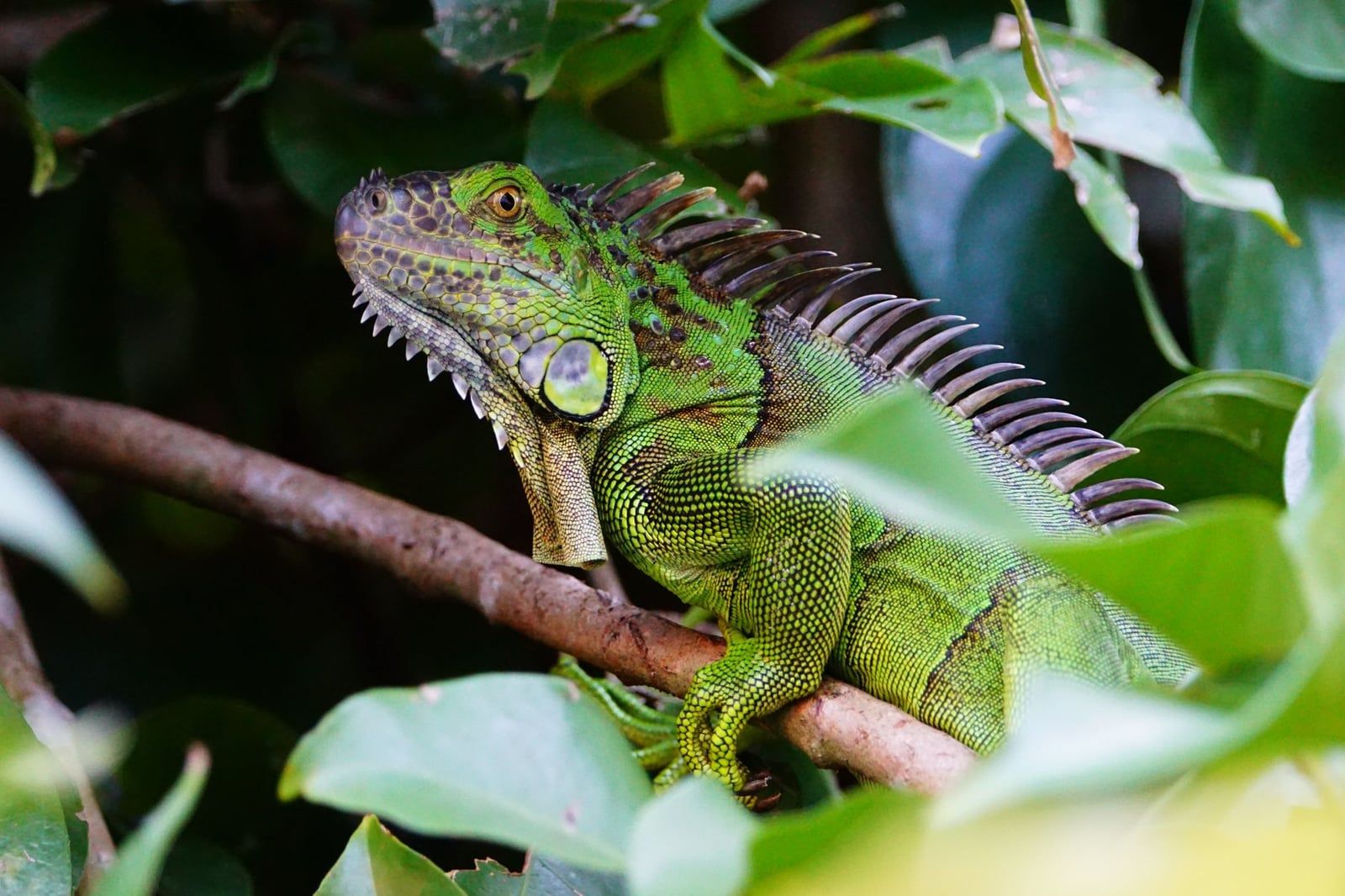
Iguanas are the park's unpaid staff. Green iguanas bask on branches over the trails and spiny-tailed iguanas lounge on beach-edge logs, both growing to startling sizes. Basilisks — the "Jesus Christ lizard" — sprint upright across streams and puddles; whiptails and anoles rustle through the leaf litter everywhere else.
Crocodiles, Caimans and Snakes
Crocodiles and caimans live in the swampy lagoon and mangroves, but the vegetation is so dense that sightings are rare. If a crocodile is on your list, stop at the Tárcoles Crocodile Bridge on the drive from San José — giant animals, guaranteed, from the roadside. Snakes are similarly present but shy: eyelash pit vipers and boas are mostly nocturnal, and bites are essentially unheard of among visitors who stay on marked trails. Don't grab branches in the dark and you're fine.
Frogs
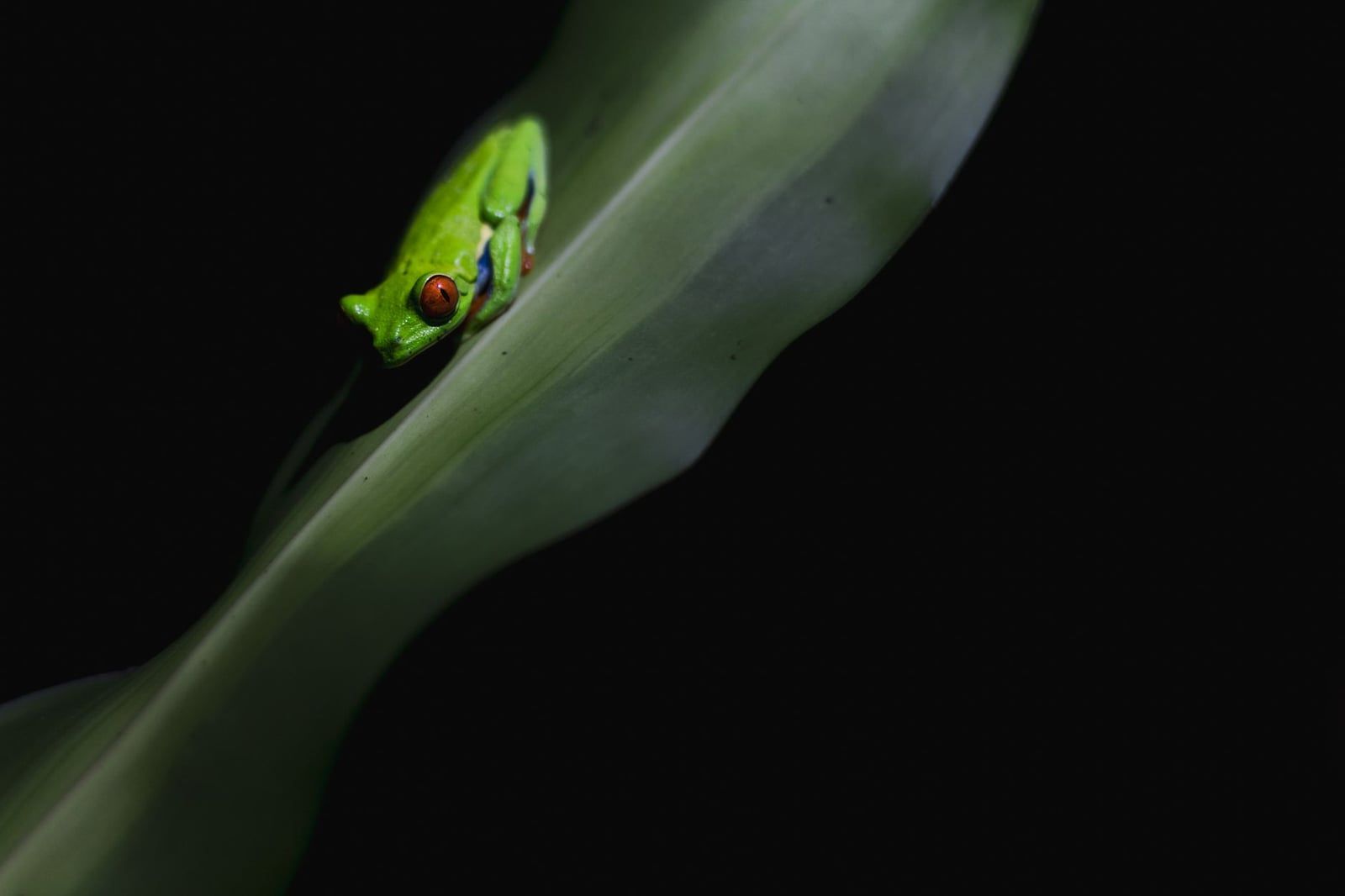
Wet season is frog season. Green poison dart frogs appear most reliably during rainy periods along the Waterfall Trail, and blue-jeans poison dart frogs (the red-bodied morph) are possible in the same window. Red-eyed tree frogs sleep under broad leaves by day, lime-green and folded flat — guides check a known circuit of leaves and usually produce one for the group. This is another category where a guide converts a lucky find into a routine one.
Crabs and Ants
The invertebrates everyone actually notices: Halloween crabs, orange and black, scuttling near the mangroves and boardwalk edges, and leafcutter ant highways marching along the trail margins in unbroken green lines. The park's small waterfall only flows in the rainy season — another reason green-season visits see things dry-season visitors don't.
When to Visit for Wildlife: Time of Day and Season
Time of day first, because it matters more than month. Enter at or near the 7 a.m. opening: the first two hours bring peak animal activity, cool air, and empty trails. Crowds build from 9 a.m. to noon, and by mid-morning the canopy heats up and animals retreat into shade. An early slot costs you nothing but sleep and buys the best wildlife hours of the day. One hard constraint: the park is open Wednesday–Monday, 7 a.m. to 3 p.m., and closed every Tuesday.
Season is a trade between weather, crowds and frogs. December to April (dry season) gives dependable mornings and packed trails — book tickets one to two weeks ahead, months ahead for Christmas and Easter week. May through November is the green season: lusher forest, fewer people, better frogs, and afternoon downpours, heaviest in September and October when SINAC itself notes the park is quietest and recommends early starts and rain gear.
| Months | What's happening |
|---|---|
| December–April | Dry season: reliable mornings, biggest crowds, hardest tickets; humpbacks possible early in the window |
| May–July | Green season begins: thinner crowds, lush forest, frog activity rising |
| August–November | Humpback whales offshore; dolphins year-round on boat tours |
| September–October | Wettest months: quietest trails, best frogs, muddy paths — pack rain gear |
| November | Shoulder sweet spot: green, calm, and SINAC's in-park night tours restart (Wed–Fri evenings, Nov–Apr) |
If you want one recommendation: November or early December, or any green-season month if frogs outrank sunshine on your list. If you're locked into dry season, the 7 a.m. entry slot does most of the crowd-avoidance work for you.
How to Maximize Sightings: Guide vs. Self-Guided
The single biggest decision for your wildlife count isn't the trail or the season — it's whether someone who does this every day is walking next to you.
Why Guides Find More
Camouflage defeats even a good camera lens. ICT-certified naturalist guides know which cecropia held a sloth yesterday, carry spotting scopes that turn a distant fur-ball into a portrait, and photograph animals through the scope onto your phone. Best of all, they share: a radio network among guides means a titi troop one group finds becomes your group's sighting twenty minutes later. Visitors with long lenses routinely walk right past animals a guide then points out from ten meters away.
What It Costs
Group wildlife tours with certified naturalists start around $53 per person plus VAT, and private tours from about $84 plus VAT — book online in advance to lock an early slot. You can also hire ICT-certified guides directly at the entrance (7 a.m.–2 p.m., roughly $40–70 per person). In every case the park ticket is separate, so don't forget the SINAC purchase.
Going Solo
Self-guided works if you work at it. Walk slowly — half the speed you think is normal. Stop often and listen; howler roars and titi squeaks are audible from far off, and agoutis give away coatis. Bring binoculars (the single most-forgotten item), start at opening, and cover more trails rather than lingering at the first iguana. Budget the Sloth Trail, Manglar and Punta Catedral for a full morning.
Wildlife Without a Ticket
For arrival days or a sold-out date, wildlife doesn't stop at the gate. The road to the entrance is lined with trees where monkeys and sloths appear; many hotels and restaurants in the area host passing squirrel monkey troops on their grounds; and the area around Marina Pez Vela in Quepos produces regular surprise sightings, including seabirds. None of it costs a colón.
Wildlife Rules Every Visitor Should Know
The feeding ban is the big one. Feeding wildlife is prohibited and fined, because it wrecks animals' diets and behavior — it's the direct origin of Manuel Antonio's thieving capuchins. Keep your distance from every animal, never touch, and stay on marked trails.
Food follows from that: none comes through the gate. Bags are searched at the entrance, packaged snacks and single-use bottles are turned away, and water is fine only in a reusable bottle — refill fountains sit on the Sloth Trail and near the beaches. Even the park café is caged, to keep the monkeys out of the business of lunch.
Gate logistics decide whether you make the 7 a.m. golden hour at all. Tickets are online-only at SINAC's portal (serviciosenlinea.sinac.go.cr) — there is no booth at the entrance, and fake-ticket sellers in ranger costumes work the approach road. Foreign adults pay $18.08 with IVA, children 2–12 pay $5.65, entry is capped at 1,120 people per day, and you must carry the physical passport matching your booking. Full current details are on our hours and entry fees page; buy the earliest slot the day your dates are set.
Go early, keep the bag zipped, and scan the cecropias. Everything else in this park is easier than it looks.
Frequently asked questions
What animals will I see in Manuel Antonio National Park?
Near-certain: capuchin and howler monkeys, iguanas, basilisks, agoutis, Halloween crabs, pelicans and frigatebirds. Good odds, especially with a guide: both sloth species, squirrel monkeys, toucans and aracaris, coatis and deer. Lucky: poison dart frogs, red-eyed tree frogs, snakes, crocodiles, kinkajous. The park records 109 mammal and 184 bird species, but these are wild animals — nothing is guaranteed.
Are there sloths in Manuel Antonio National Park?
Yes — both the brown-throated three-toed sloth and Hoffmann's two-toed sloth live in the park. Three-toed sloths are the ones you see by day; two-toed sloths are nocturnal. They sleep up to 20 hours a day in the canopy, so a guide with a spotting scope finds them far more reliably than visitors scanning alone. Check the Sloth Trail, Manglar Trail, and the Playa Manuel Antonio trail.
Can you see all four Costa Rican monkey species in Manuel Antonio?
No. Three of the four live here — white-faced capuchins, mantled howlers and the endangered Central American squirrel monkey. Spider monkeys are, at best, rare in remote sections, and regular visitors essentially never see them. For reliable spider monkeys, go to Corcovado or Tortuguero.
Do you need a guide to see wildlife at Manuel Antonio?
Not mandatory, but it's the best money you'll spend here. Guides carry spotting scopes, photograph animals through the scope onto your phone, and share sightings with each other by radio. Group tours start around $53 per person plus VAT, private tours from about $84. Going solo: walk slowly, listen, bring binoculars, and start at the 7 a.m. opening.
What time of day is best for wildlife in Manuel Antonio?
Right at the 7 a.m. opening. The first two hours have the most animal activity and the coolest air; crowds build from 9 a.m. to noon and heat pushes animals into shade. Note the park is open Wednesday–Monday, 7 a.m. to 3 p.m., and closed every Tuesday.
When is the best month or season to visit for wildlife?
December–April (dry season) gives the most dependable mornings but the biggest crowds. May–November is greener and quieter with the best frog activity, and September–October are the wettest months. Humpback whales pass offshore from August into November, which makes late green season a strong wildlife pick.
Can you feed or touch the animals in Manuel Antonio?
No — feeding wildlife is prohibited and fined, and it's what made the capuchins into aggressive bag-raiders. Food and drinks aren't allowed through the entrance at all (water in reusable bottles is fine), bags are searched, and the park café is caged to keep monkeys out. Keep your distance from every animal.
Where can I see wildlife near Manuel Antonio without a park ticket?
Plenty. The road to the park entrance is lined with trees where monkeys and sloths appear, many area hotels and restaurants host passing squirrel monkey troops on their grounds, and the Marina Pez Vela area in Quepos turns up regular surprise sightings — including seabirds and, on boat tours, dolphins.