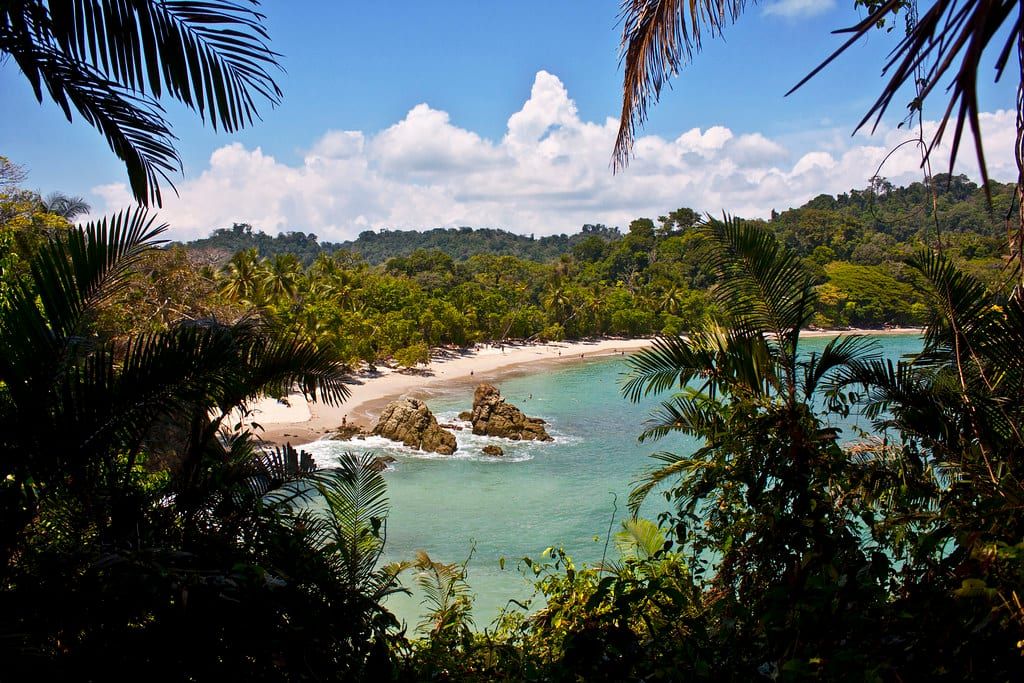
Manuel Antonio National Park squeezes rainforest, an 18-hectare mangrove and four white-sand beaches into 1,983 hectares on Costa Rica's central Pacific coast, 7 km southeast of Quepos. It is the most visited of the country's 30 national parks, with 4.4 million visitors between 2012 and 2022, and it has roughly 11 trails — every one of them short. Hiking here is a sorting problem: which trails to combine, in what order, before the heat and the crowds catch up with you.
This guide covers every trail with distances, stair counts and wildlife expectations, then strings them into a one-day route. It also covers the logistics that shape the day more than the terrain does: online-only tickets, the Tuesday closure, the bag checks, and whether a guide is worth the money.
What Hiking Manuel Antonio Is Actually Like
This is one of Costa Rica's smallest national parks, and the trails reflect it. Distances run from about 300 m to 1.4 km, surfaces are elevated metal boardwalk, concrete and gravel, and there is nothing technical anywhere — no scrambling, no river crossings, no exposure. What will slow you down is the tropical humidity and the stairs.
The park's main corridors are built for everyone. The elevated boardwalk is 2.42 meters wide with railings sized for wheelchair users, children and seniors, and there is braille signage along the route. Sendero Perezoso and El Manglar are flat, paved or boardwalked, and strollers handle them fine. The stair trails — Miradores, Punta Catedral, the Puerto Escondido lookout — are the exception.
Walking every trail takes about 5 hours, though almost nobody does that in one push. Most visitors hike a subset and spend the rest of the day on the beach. Budget for heat: the exposed lookouts bake by late morning, so the standard advice is to start at the 7 a.m. opening and be swimming by noon.
One date fact to plan around: the park closes every Tuesday and runs 7 a.m. to 3 p.m. Wednesday through Monday. Arriving on a Tuesday is the single most common planning mistake here.
The Trails, Ranked: What to Hike First
With 11 short trails, the useful question is not "which is best" but "which fits your goal." Want views? The Miradores and Punta Catedral loops. Want wildlife? The entrance corridors. Want quiet? The beach trails on the far side. Here they are grouped by what you're actually there for, with the connections that let you chain them.
The entrance corridors: Access Road, El Manglar and Sendero Perezoso
The Access Road is a 1.1 km flat gravel road from the gate into the park, and despite being the least trail-like trail, guides rate it one of the best wildlife walks here — most guided groups work it slowly, sweeping the trees with scopes. Take your time on the way in.
Sendero El Manglar is a 1 km elevated boardwalk through the mangrove — red, piñuela and caballero species — and it's fully wheelchair accessible, doable in 20 to 30 minutes. Water birds work the channels, and early mornings occasionally turn up deer. Sendero Perezoso, the Sloth Trail, continues roughly 600 m on flat pavement through cecropia trees, and it is the park's sloth hotspot: both two-toed and three-toed sloths feed there, often within meters of the path. Scan for a lump that doesn't match the branch. For more on where and when to look, our guide to sloths in Manuel Antonio covers the habits of both species.
The viewpoints loop: Miradores, Los Congos, Gemelas and Puerto Escondido
Sendero Miradores is the park's toughest trail, which tells you something about the park. It runs about 1 km each way with roughly 300 stairs per direction, climbing to overlooks near 160 m above the sea with views over the marine reserve and Punta Serrucho — a saw-toothed formation on a tectonic fault line. Go early; the stairs are exposed and the humidity does the real damage.
Los Congos links onward toward the coast and is the howler trail — mantled howlers are loudest and easiest to find along it. From there, the Playa Gemelas and Puerto Escondido trails total 740 m, dropping about 145 steps to a lookout platform above Playa Puerto Escondido. The beach itself is not accessible from the lookout, and note that the final roughly 300 m of the Puerto Escondido trail were still blocked in 2025 after years in disrepair — check its status at the gate before counting on it.
Punta Catedral: the tombolo loop
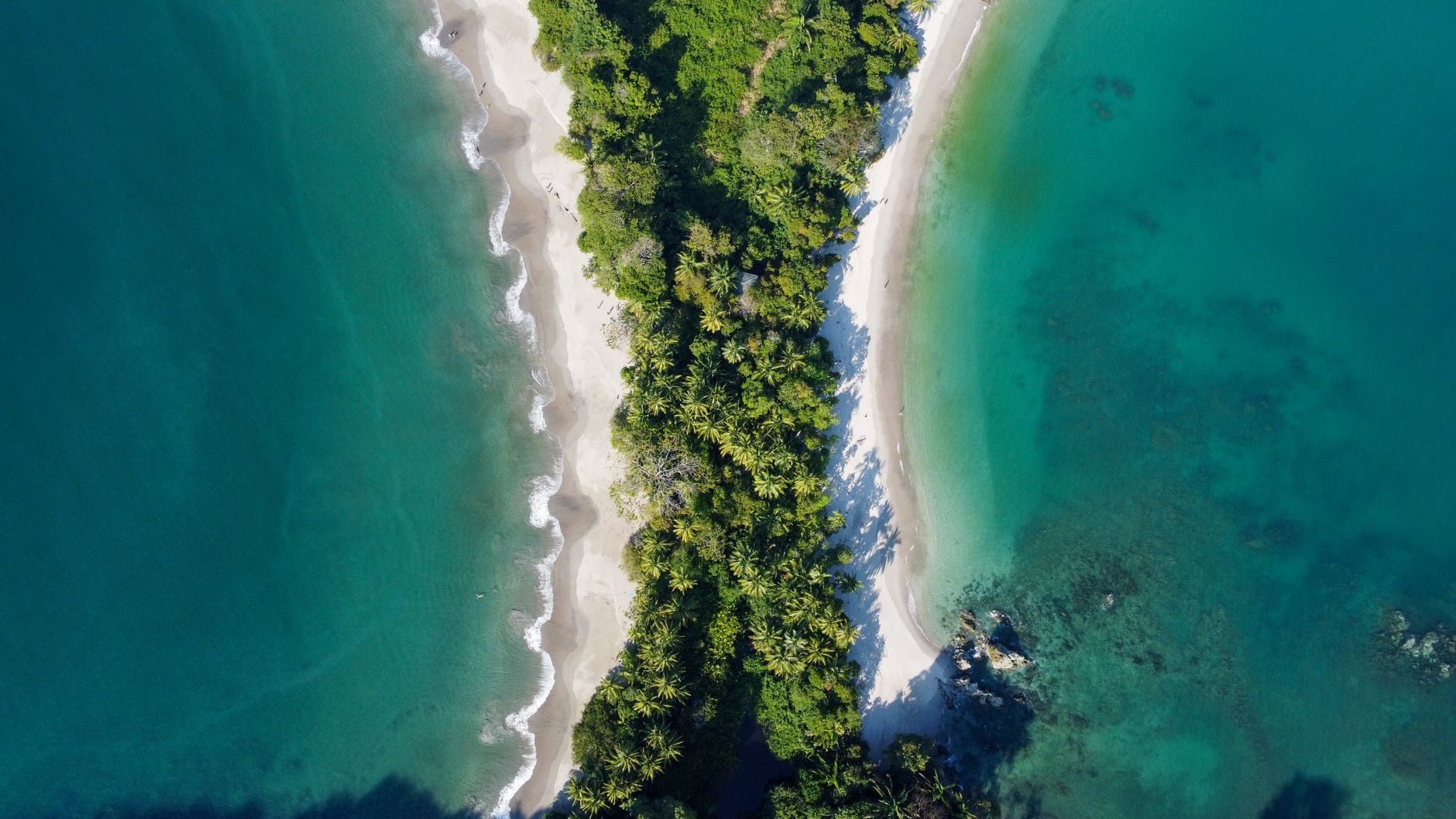
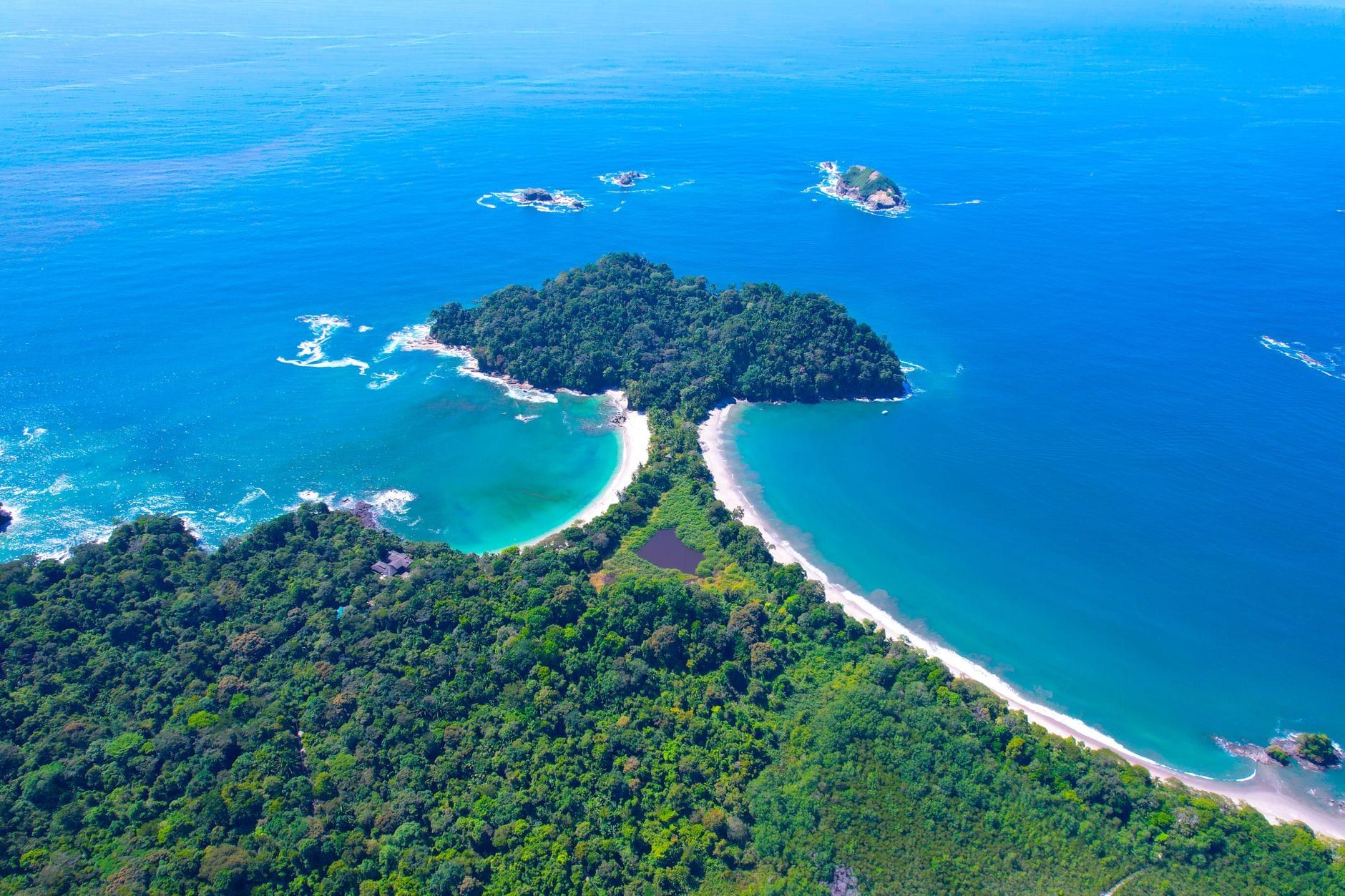
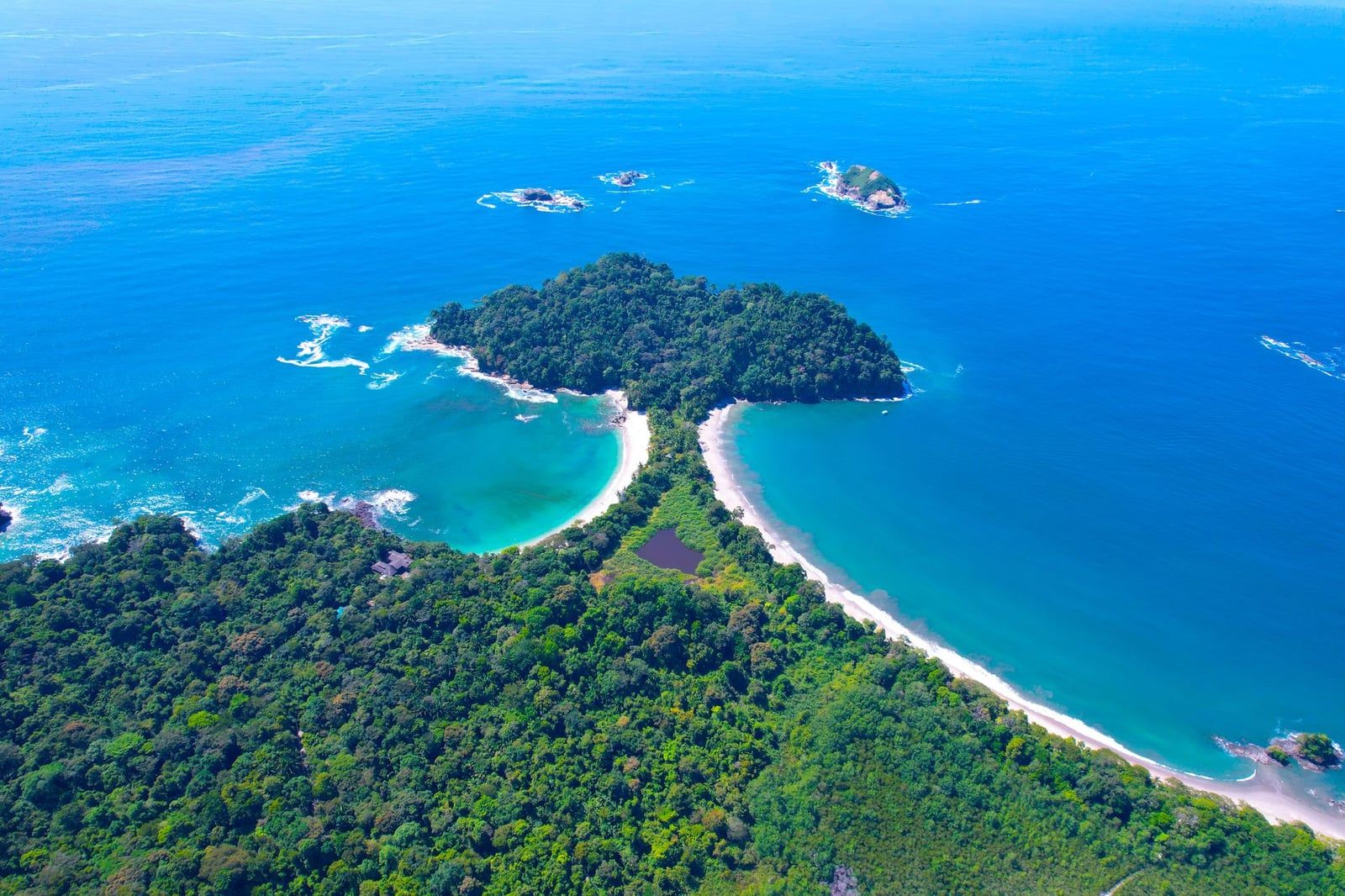
Punta Catedral is a former island, 100 m at its summit, attached to the mainland by a sand tombolo — the narrow spit you cross to reach it. The loop is 1.4 km and takes 45 to 60 minutes with a moderate incline, passing five viewpoints over Pacific islands that double as seabird rookeries. At low tide you can spot La Trampa from the cliffs: a circle of pre-Columbian Quepoa stonework in the water below, built to trap turtles and fish.
The loop had been closed for years with bridges in disrepair, but it reopened in 2025 with repaired miradors, bridges and paths — the park's biggest recent trail news. From the tip lookout, humpback whales pass close to shore from August to November, with occasional sightings into the dry season.
Sendero Catarata: the seasonal waterfall
The waterfall trail runs 676 m one way with steep stair sections to a small, seasonal cascade. It only flows in the rainy season, May to November — which is also when poison dart frogs are active along it, the real reason to go. In dry season, skip it and spend the time on Punta Catedral.
The beach trails: Playa Manuel Antonio and Espadilla Sur
Sendero Playa Espadilla Sur runs about 1 km on flat sand behind the beach, with only three designated access points down to it. The trail to Playa Manuel Antonio branches off the main corridor near the cafeteria and ends at the park's famous crescent. Between the two, you cover the park's entire coastline on foot.
Navigation is a non-issue: signs and maps sit at every trail intersection, and the whole network is small enough that a wrong turn costs you ten minutes. If you want the wider picture, our roundup of things to do in the park places the trails alongside the beaches and boat trips.
Beaches and Swimming on the Trail
Four beaches sit inside the park, and the swim-safety differences between them are sharp enough to shape your route. Here is the verdict on each.
- Playa Manuel Antonio — calm, sheltered cove; the park's best swimming, with casual snorkeling at the rocks on flat days.
- Playa Espadilla Sur — broader and quieter, but strong surf and rip currents; swim with care.
- Playa Gemelas — secluded cove with a strong current; swimming is not advised.
- Playa Puerto Escondido — lookout only; no trail access to the beach.
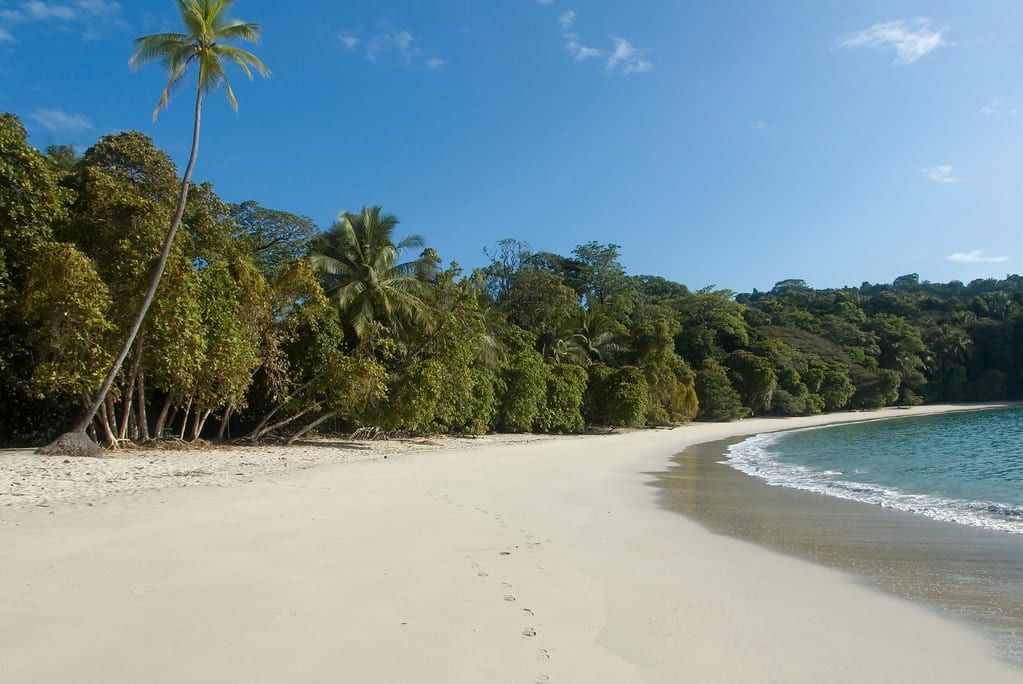
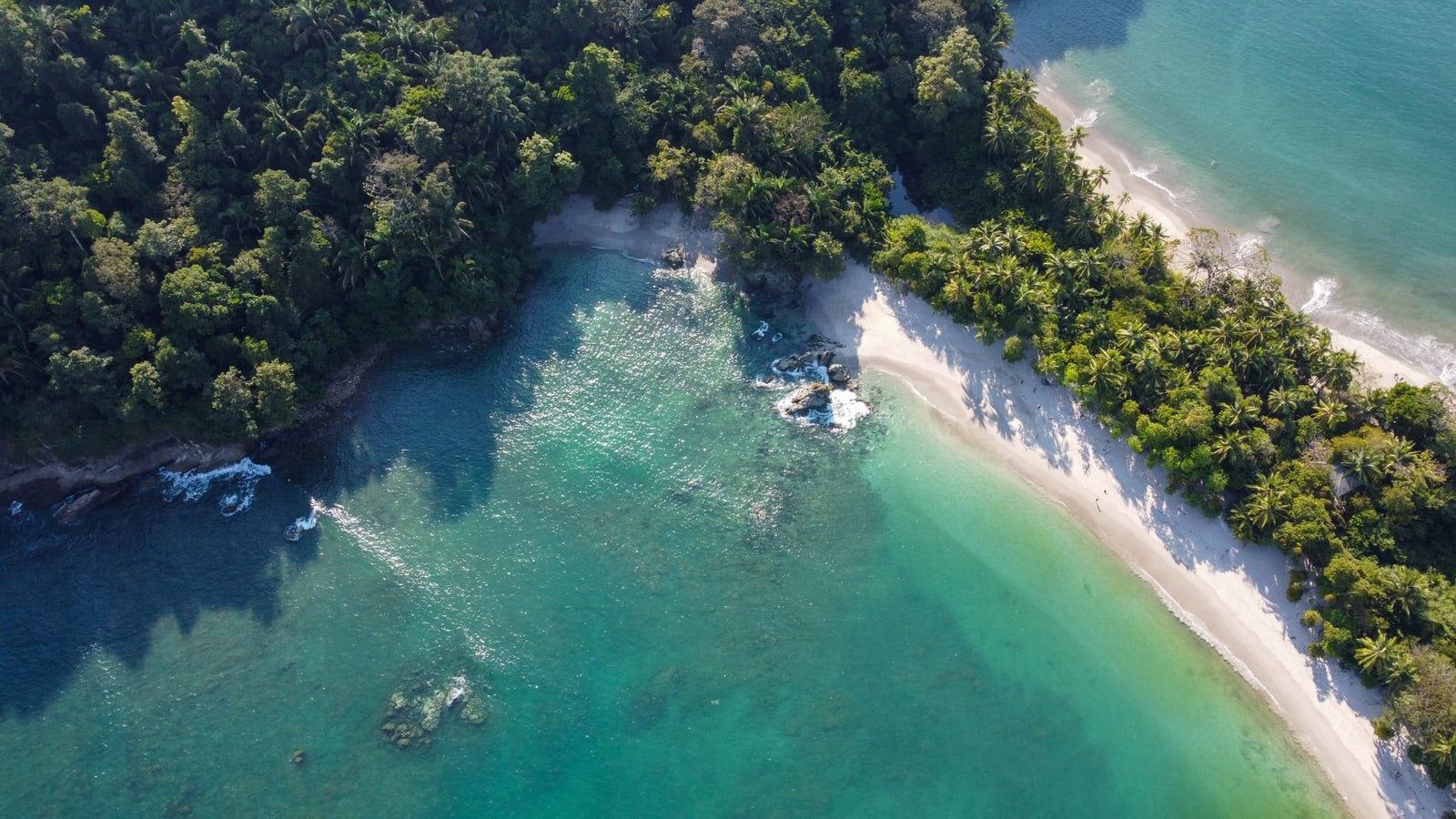
Playa Manuel Antonio is an ~800 m crescent backed by forest, with a sandy sea floor and showers and changing rooms nearby. That's where you swim. Espadilla Sur is the beach to walk, not swim — and its sand gets hot enough by midday that barefoot crossing is genuinely painful, so bring sandals. A lifeguard program operates on the main beaches, but riptides still occur; keep children close in the water.
Timing matters: the beaches close at 3 p.m., when the park itself shuts. Plan your swim for midday, not the last hour. If you'd rather swim after hours, the calm cove at Playa Biesanz, a 10–15 minute walk from the park entrance, is outside the gate and open all day.
A One-Day Route That Covers Every Trail
Every trail except the seasonal waterfall fits comfortably into the 7 a.m. to 3 p.m. window, with time to swim. The whole point of the early start is that it buys you two things: cooler air and emptier trails. Wildlife is most active in the first two hours, and the big tour groups don't arrive until around 9 a.m. — so the deepest walking should be done before they do.
Here is the order that minimizes backtracking — only Perezoso gets retraced. Hikers visiting between May and November should slot the Catarata trail in first, before the Miradores stairs:
- 7:00 a.m. — enter on the first slot and walk the Access Road slowly, scanning the trees.
- Sendero Miradores out and back — 300 stairs each way to the Punta Serrucho overlook.
- Los Congos to Playa Gemelas, then the 145 steps down to the Puerto Escondido lookout.
- Return via Sendero Perezoso — the one backtrack — moving slowly for sloths.
- Lunch at the cafeteria near the beach junction.
- Swim at Playa Manuel Antonio while the midday tour crowds thin out.
- Punta Catedral loop, then exit along the Espadilla Sur beach trail to El Manglar and the gate.
Taking a guided tour first? The 2–3 hour guided walks finish near the cafeteria junction, which drops you exactly where this route picks up at step five — beach, then Punta Catedral, then out. Book the 7:30 a.m. departure so you're walking the loop by 10.
Tickets, Hours, and Getting There
There is no ticket booth at the gate. Every ticket is sold online through SINAC's portal (serviciosenlinea.sinac.go.cr): create an account, select the park, pick a date and a 15-minute arrival slot, and pay. At the entrance you show the reservation barcode plus the physical passport that matches the booking — a phone photo of it is not accepted. Entry is one-time only; you cannot leave and re-enter the same day.
Fees include tax: $18.08 for foreign adults (12+), $5.65 for children 2–12, free under 2, and ₡1,808 for resident adults. A court ruling in May 2023 cut the daily cap to 1,120 visitors, and the park does not add capacity — book 1–2 weeks ahead in dry season (December–April) and months ahead for Christmas, New Year and Easter week. Maximum six tickets per transaction. August 24, National Parks Day, is free for everyone. For the full schedule and fee breakdown, see our page on park hours and entry fees.
Hours are Wednesday to Monday, 7 a.m. to 3 p.m., closed Tuesdays. Entry slots fill the morning; if you book a late slot, expect roughly an hour or two in the park rather than a full day. Concession services run slightly longer than the gates — the cafeteria until 3:30 p.m., locker rental until 4 p.m. — and from November to April the park runs special afternoon and night tours at 3:30 and 5:30 p.m.
Getting there: the park entrance is 7 km from Quepos, 157 km from San José. The local bus from Quepos runs every 15–30 minutes from about 7 a.m. and costs ₡315; the last stop is a 10-minute walk from the gate via the Beach Trail path. From San José, the direct Tracopa bus takes about 3.5 hours (₡4,500) or you can fly to Quepos in 25 minutes ($75–100). The road is fully paved — no 4x4 needed. Our directions guide covers every option, including shuttles and private transfers.
Parking is all private: there is no official lot, and the lots about 150 m from the entrance charge ₡3,000–5,000 (roughly $6–10) per day. Men waving cars down partway down the hill are touts, not officials — keep driving to the gate area.
Do You Need a Guide? (And What Each Option Really Costs)
No — a guide is optional, the trails are well-marked, and self-guided visitors routinely see all three monkey species and often sloths on their own. What guides genuinely add is trained eyes and a spotting scope: sloths and camouflaged animals that are nearly invisible to you are obvious to them, and most guides will shoot close-up photos of animals through their scope using your phone.
You have three ways to hire one. ICT-certified naturalists work the park entrance from 7 a.m. to 2 p.m. for roughly $40–70 per person for about a two-hour walk — your park ticket is extra. Ask to see their certification badge, called the "carnet," with an ICT number. Pre-booked tours bundle the ticket, transport and a naturalist into one price; group departures run $53 per adult ($44 per child 2–11) and private tours $84 per person, plus 13% tax, lasting about 3 hours at 7:30 a.m. or 12:30 p.m.
| Option | Cost per adult | Duration | What's included |
|---|---|---|---|
| Guide at the gate | $40–70 + your park ticket | ~2 hours | ICT-certified naturalist with scope; ask for the carnet |
| Group tour | $53 + 13% tax (kids $44) | ~3 hours | Ticket, hotel transport, naturalist, snack; 7:30 a.m. or 12:30 p.m. |
| Private tour | $84 + 13% tax per person | ~3 hours | Same as group, your party only |
The verdict: if your budget is tight or you like your own pace, go self-guided and walk the Access Road and Perezoso slowly — you will not come away empty-handed. If sloths are the reason you came, pay for the scope. You can compare wildlife tours with certified naturalists or browse private tour options to see exactly what each includes.
What You Can Bring (and What Gets Confiscated)
The bag check at the gate is real, and rangers confiscate on the spot. The rules exist to protect wildlife — a fed monkey is a dead monkey — so repack before you leave your hotel. Banned items:
- Food of any kind (babies and pregnant women may bring a limited amount)
- Single-use plastic bottles and packaged snacks
- Alcohol, cigarettes and vapes
- Drones, speakers and coolers
- Beach chairs, umbrellas, hammocks and balls
- Aerosol sprays — including spray sunscreen
A reusable water bottle is allowed and encouraged; potable refill fountains sit on the Sloth Trail and near both main beaches, and 1.5 liters is a sensible load in the humidity. For food, the in-park cafeteria (7:30 a.m.–3:30 p.m.) sells pizza, sandwiches, vegan burritos, fruit, baked goods, salads, ice cream and drinks. Lockers run about $6 per day, and there are bathrooms, changing rooms and showers — though soap and shampoo are banned in the showers, so rinse only.
What to Wear and Pack
Leave the hiking boots at home. Nothing underfoot is technical — boardwalk, concrete, gravel, sand — so sneakers or sport sandals are the call, with a pair of flip-flops or water shoes for the burning-hot beach sand. SINAC recommends closed walking shoes for the forest stretches; plenty of hikers do the whole park in Tevas.
- Light, breathable quick-dry clothes, a hat and sunglasses
- Reef-safe lotion sunscreen — never spray
- Swimwear worn in, plus a towel (changing rooms at both main beaches)
- A waterproof bag — rain is possible any day of the year
Trail Safety: Monkeys, Riptides, and the Manzanillo Tree
Never feed the animals, and keep your bag zipped and on your body. Monkeys are highly sensitive to the bacteria on human hands, and hand-fed food can sicken or kill them — it also disrupts nursing mothers. Feeding wildlife carries fines, and it teaches capuchins and raccoons to raid bags; white-faced monkeys are known to unzip an unattended backpack on the beach in seconds. Eat only in the cafeteria area, and never leave belongings on the sand.
The park's three monkey species are howler, white-faced capuchin and the endangered squirrel monkey (mono tití), the smallest of the three and found in the wild only here and around Corcovado. Our guide to the park's monkeys covers how to tell them apart and where each hangs out. Keep your distance from all of them, and let guides' scopes do the close-up viewing rather than approaching.
Along Playa Espadilla Sur, learn the manzanillo (manchineel) tree before you spread your towel. Its sap, leaves, bark and apple-like fruit are all poisonous, and rain dripping from its branches can blister skin — it's signed throughout the park, so heed the signs and never sit in its shade. In the water, the riptides at Espadilla Sur and Gemelas are the other real hazard; swim in the calm bay at Playa Manuel Antonio instead. Stay on marked paths everywhere else — the forest floor off-trail is both fragile and full of things you don't want to touch.
Manuel Antonio Hiking FAQs
Do you need a guide to hike Manuel Antonio National Park?
No. Guides are optional, trails are well-marked, and self-guided visitors regularly see monkeys and even sloths. Gate-hired ICT-certified naturalists cost roughly $40–70 per person for a two-hour walk; pre-booked tours run $53 per adult in a group or $84 private, plus 13% tax. Guides add the most value for sloths and camouflaged wildlife thanks to their spotting scopes.
How long does it take to hike all the trails in Manuel Antonio?
About 5 hours of walking covers every trail, since each runs 300 m to 1.4 km. All of them fit in one day inside the 7 a.m. to 3 p.m. hours, with time to swim. Most visitors hike a subset — enter at 7 a.m. and you'll finish the busy loops before the 9 a.m. tour groups arrive.
How much does it cost to enter Manuel Antonio National Park?
Foreign adults (12+) pay $18.08 including tax, children 2–12 pay $5.65, and under-2s are free; Costa Rican residents pay ₡1,808. Tickets are sold online only via SINAC's portal for a fixed arrival slot, capped at 1,120 visitors per day, and entry is one-time with no same-day re-entry. Bring the physical passport matching your booking.
What can't you bring into Manuel Antonio National Park?
No food of any kind — rangers search bags and confiscate it, with a narrow exception for babies and pregnant women. Also banned: single-use plastic bottles, alcohol, cigarettes and vapes, drones, speakers, coolers, beach chairs and umbrellas, and aerosol sprays. Reusable bottles are fine, with refill fountains in the park and a cafeteria on site.
Is Manuel Antonio National Park open every day?
No — it closes every Tuesday for maintenance and is open Wednesday to Monday, 7 a.m. to 3 p.m., year-round including holidays. Beaches effectively close at 3 p.m. when the park empties. Verify current hours when booking your ticket slot.
Do you need hiking boots for Manuel Antonio?
No. Trails are boardwalk, concrete, gravel and sand with nothing technical, so sneakers or sport sandals are ideal — SINAC recommends closed walking shoes for the forest stretches. Bring flip-flops or water shoes for the beach, where the sand gets extremely hot.
Is the park accessible for wheelchairs and strollers?
Yes, on the main corridors. The elevated boardwalk is 2.42 m wide with railings for disabled visitors, braille signage is installed along it, and the flat, paved Sloth Trail and El Manglar boardwalk work for wheelchairs and strollers. The stair trails — Miradores, Punta Catedral and the Puerto Escondido lookout — are not accessible.
Can you swim at the beaches after hiking?
Yes — Playa Manuel Antonio has the calmest, safest water, with casual snorkeling at its rocky sides on flat days. Playa Espadilla Sur and Playa Gemelas both carry strong rip currents, and Playa Puerto Escondido is lookout-only. Note the 3 p.m. closing: swim midday, not at the end.