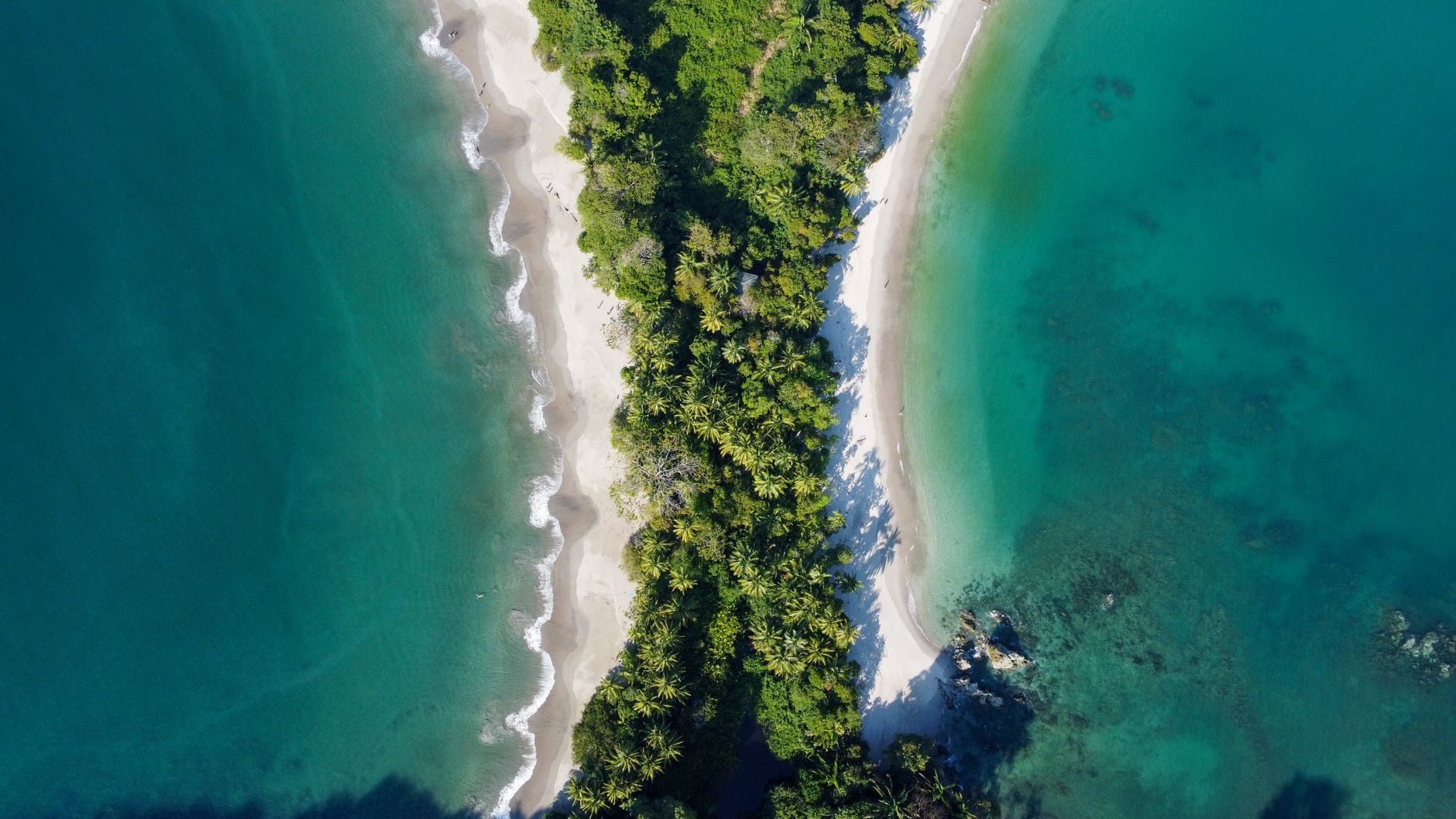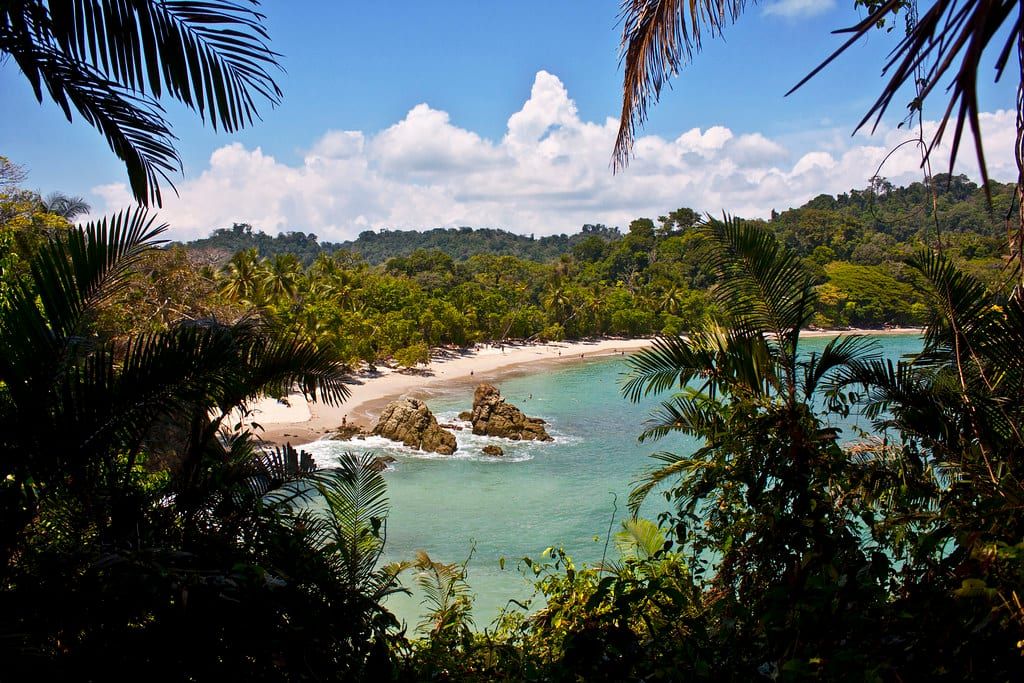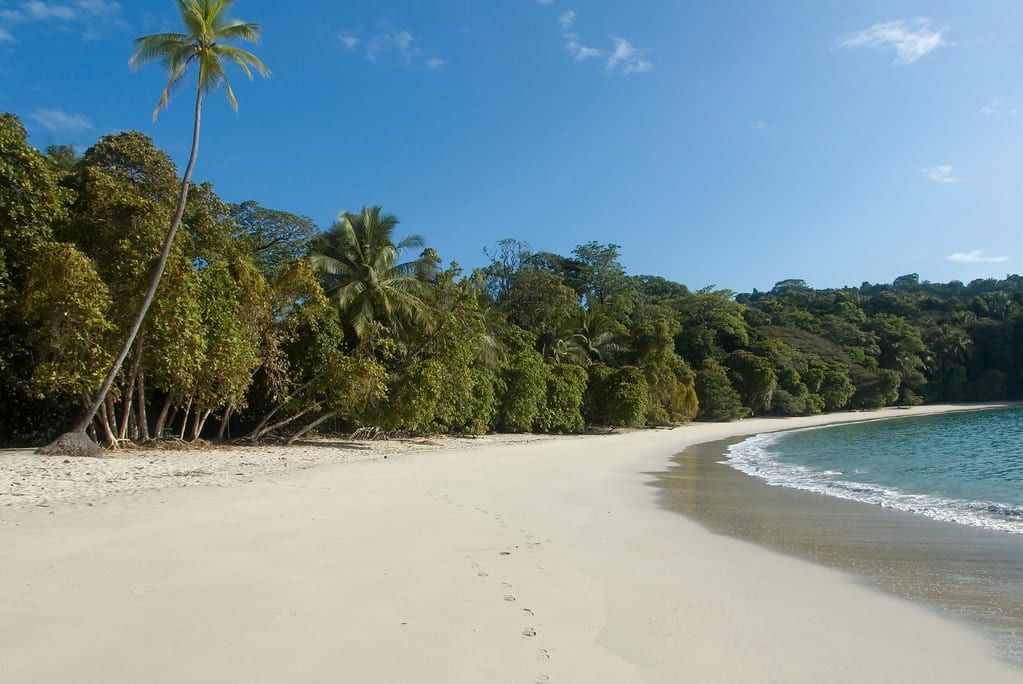
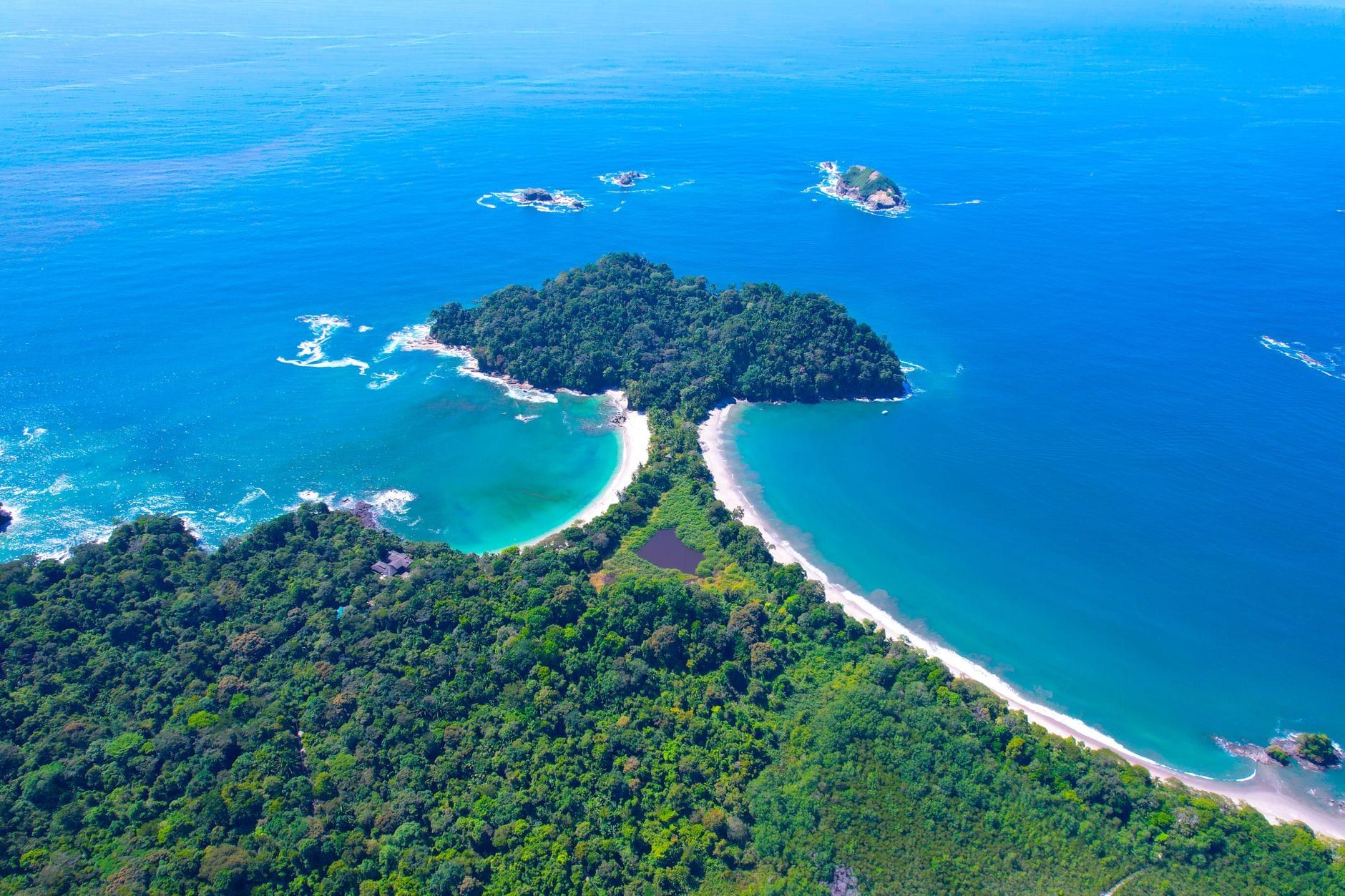
Manuel Antonio National Park is one of the easiest places on Earth to see wild monkeys. The park is tiny — under 2,000 hectares of land wedged between Quepos and the Pacific — yet its habituated troops of white-faced capuchins, mantled howlers, and endangered squirrel monkeys work the forest within meters of the trails. Some visitors watch a capuchin unzip an unattended backpack on Playa Manuel Antonio before they've reached the first trailhead sign. Here's how to identify all three species, where each one actually hangs out, and how to plan a morning around them — including the entry logistics that make or break a monkey walk.
Meet Manuel Antonio's Monkeys: The Three Residents and the Fourth That's a Rumor
Three species are resident in the park, and you can tell them apart at a glance once you know the field marks. If you want the wider cast too — sloths, coatis, iguanas, 350-plus bird species — our full wildlife guide to Manuel Antonio covers the rest of the census. For monkeys, this is what you're looking for.
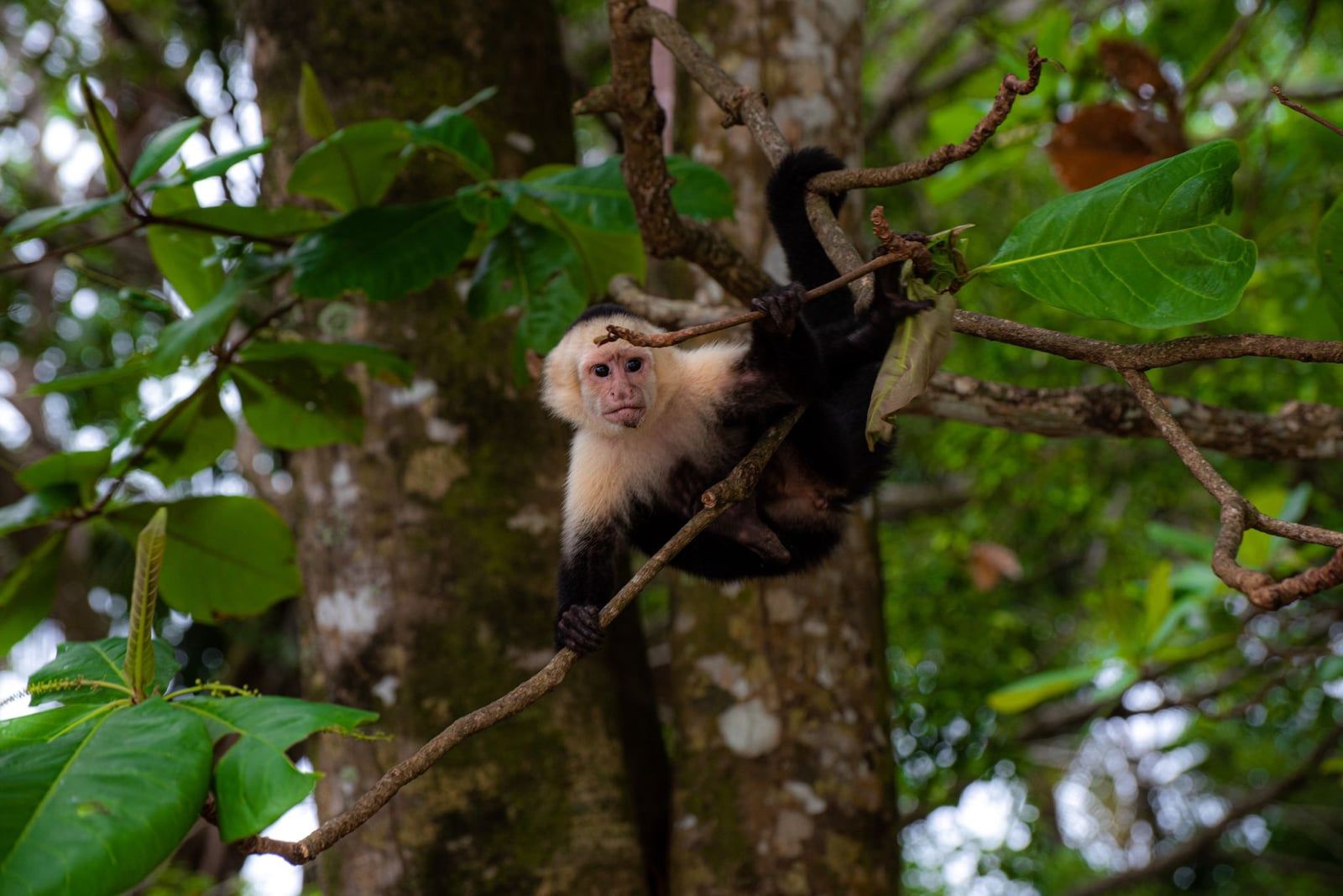
White-Faced Capuchin: The Backpack Raider
Black body, white face and shoulders, often travelling in troops of up to 30 — the capuchin is the monkey you'll see most, and the one that will steal your lunch. It's the smartest animal in the park: capuchins eat fruit, leaves, insects, and small vertebrates, and they've learned exactly how a zipper works. They forage along the main trails and show up daily on the beaches inside the park, where most bag-raiding happens.
Mantled Howler: The One You Hear First
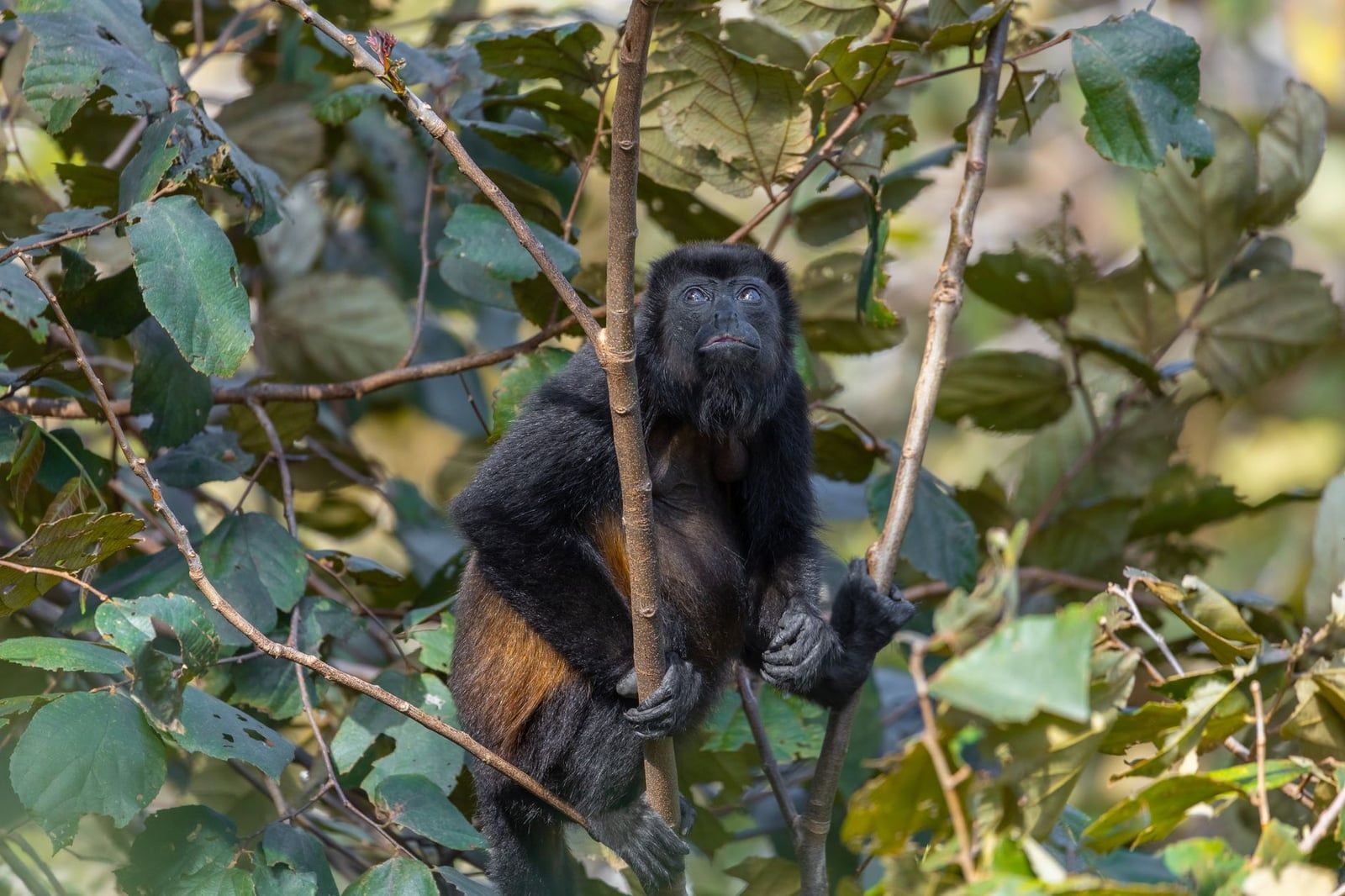
The howler is the biggest monkey here — around 20 pounds (9 kg) of black fur spent mostly dozing in the tall canopy, digesting leaves. You will almost certainly hear one before you see one. The territorial roar carries over a mile, and it starts before dawn. On the trails, scan the tallest trees near the entrance; a dark, bulky shape draped over a limb, tail hanging like a fifth hand, is your howler.
Central American Squirrel Monkey (Mono Tití): The Smallest and Rarest
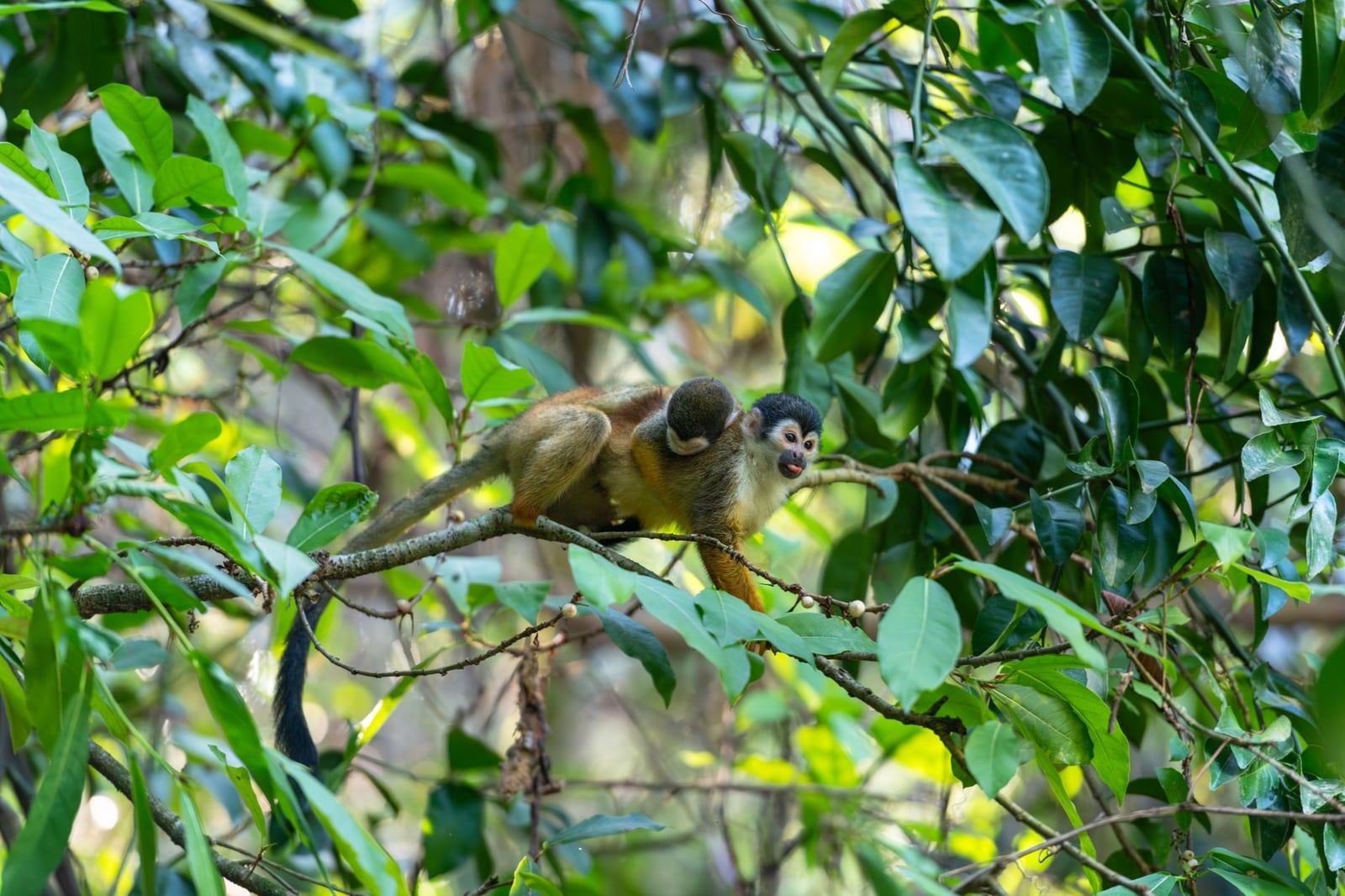
Under a foot tall, barely two pounds, with an orange-gold back and a black-and-white facial mask — the tití is the smallest monkey in Costa Rica and the reason many naturalists come to Manuel Antonio at all. Troops of 20 to 30-plus animals pour through the mid-canopy at speed, a river of tiny gold backs that arrives, overturns a section of forest, and is gone. They're fast and rarely still, which is exactly why people misidentify them.
Spider Monkeys: The Rumor
Some blogs list four species for Manuel Antonio, spider monkeys included. Don't plan around it. They're said to live in the park, but repeat visitors with a dozen-plus trips report never seeing a single one. If spider monkeys are your target, Corcovado and Tortuguero are the reliable parks in Costa Rica. Here, treat a spider monkey sighting the way you'd treat a jaguar sighting: great story, but don't build an itinerary on it.
Field-ID Cheat Sheet (and the Common Mix-Up)
The mistake almost everyone makes is calling a tití a "baby capuchin." The ID is simple: a capuchin has a white face and a black body; a tití has a dark cap and an orange-gold back. A capuchin also carries about three times the body mass and moves deliberately, hand over hand. A tití troop never stops moving. If you saw a small monkey and it held still for you, it wasn't a tití.
| Species | Size | Field marks | Movement |
|---|---|---|---|
| White-faced capuchin | Medium (~3–4 kg) | White face and shoulders, black body | Deliberate, often low or on the ground |
| Mantled howler | Large (~9 kg) | All black, thick prehensile tail | Slow; draped in the high canopy |
| Mono tití | Tiny (<2 lbs) | Orange-gold back, dark cap, masked face | Fast, restless, mid-canopy troops |
| Spider monkey | Large | Long limbs, hook-like hands | Not reliably present in the park |
Why is this small park so reliable for monkeys? Roughly 5 miles (8.3 km) of trails thread through a compressed mix of rainforest, mangrove, and beach, so three habitat types sit within a half-hour walk of each other. The troops are also habituated — generations of them have grown up around people and learned we're boring unless we carry food.
The Mono Tití: An Endangered Monkey That Lives Nowhere Else
The squirrel monkeys in Manuel Antonio are the Central Pacific subspecies, Saimiri oerstedii citrinellus, and its entire world range is the coastal strip around Quepos and Manuel Antonio. This is a bucket-list animal in the literal sense: there is nowhere else on Earth to see it. The IUCN lists the Central American squirrel monkey as endangered, and the population collapse tells you why — from an estimated 200,000 animals in the 1980s to roughly 1,500 today, almost all of it habitat loss on a heavily developed tourist coast.
That number reframes your visit. The forest corridor around this park is effectively the species' whole world, and every monkey you see is one of a very small crowd. It also explains why the park's rules aren't decoration — more on that below — and why a tití sighting deserves a longer look than the hundredth capuchin.
The monkeys earn their keep, too. Capuchins are major seed dispersers, carrying fruit far from the parent tree and effectively planting the next generation of forest. Howlers consume huge quantities of leaves, pruning plant growth across the canopy. Titís move between flowering trees and contribute to pollination as well as seed dispersal. A forest without its monkeys is a forest that slowly stops regenerating — which is why the feeding rules exist.
Where to See Monkeys: Trails, Beaches, and Beyond the Park Gate
Manuel Antonio's trail network is small enough that you can walk all of it in a morning, and each route has its own primate personality. Match the trail to the species you're after instead of wandering and hoping.
Sendero Perezoso: The Tití Hotspot
The flat, wheelchair- and stroller-accessible boardwalk from the entrance — Sendero El Perezoso, about 1.1 km — runs through low secondary canopy and forest edge, and that's exactly the structure tití troops favor. Walk it slowly, more than once if you have time. The same cecropia trees that make this the park's best sloth road make it the best tití road too, so a slow scan rewards you twice.
Punta Catedral and the Beach Treeline
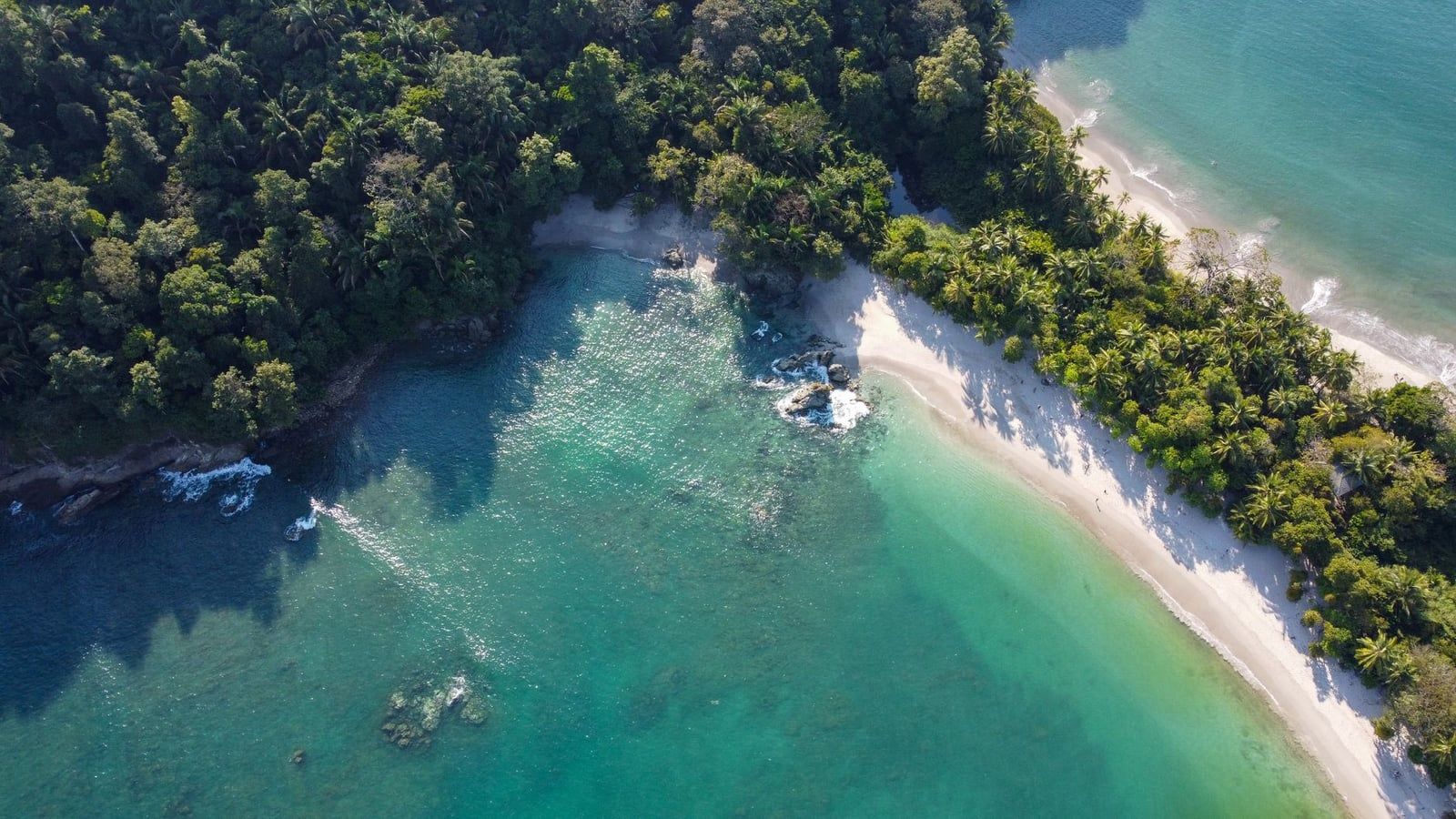
The 1.4 km Punta Catedral loop is moderate with some incline, and its first section — the forest edge before you commit to the ridge — is productive, while the higher ridge itself goes quiet. Better odds: the treeline behind Playa Manuel Antonio and Playa Espadilla Sur, where capuchins forage daily and descend to eye level. If your plan includes swimming, our guide to the beaches of Manuel Antonio National Park covers which bay is calm and which has surf.
The Mirador viewpoint, by contrast, is the least productive of the park's trails for monkeys — fine for the panorama, thin for primates. Howlers favor the tall canopy near the entrance, so get your binoculars out before you've walked ten minutes.
Outside the Gate
You don't strictly need a ticket. Troops move through the gardens and roadside trees along the Manuel Antonio–Quepos road, and hotel gardens with mature trees get regular visits — many travelers hear the howler chorus at 5 AM without ever leaving their balcony. For a different angle entirely, the Damas Island mangrove boat tour, about 20 minutes' drive away, puts you at eye level with the canopy along the estuary channels, with herons, kingfishers, and sloths in the mix.
While you're looking up, the park delivers its supporting cast anyway: two-toed and three-toed sloths (see our dedicated sloth-spotting guide), coatis, agoutis, raccoons, green iguanas, and toucans. The practical route into all of it, trail by trail, is our things-to-do guide for Manuel Antonio.
When to See Monkeys: Time of Day, Season, and the Dawn Chorus
Book the 7:00 AM slot. The 7:00–10:00 AM window, right after the gates open, is when troops feed before the midday heat shuts the forest down; late afternoon, from about 4 PM, is a weaker second window — and note the park stops admitting at 3:00 PM anyway. A squirrel monkey troop is either in your section of forest or it isn't, and a 7 AM start is the single decision that most changes your odds.
Howlers will set your alarm for free. The pre-dawn chorus runs roughly 4:30–5:30 AM, before the park opens, so most visitors hear it from their hotel bed — and again at dusk. The call carries over a mile, so a howler that sounds like it's in the parking lot may be three ridges away. Once you're inside, let the roars triangulate the troop: they call to mark territory, and they answer each other across the valley.
Season matters less than people assume. All three species are resident year-round; nobody leaves in the green season. What the dry season (December–April) actually buys you is fewer leaves and better light, which makes titís easier to see rather than more numerous, plus easier hiking on the trails. The trade is crowds: in high season the early slots sell out first, and the 7:00 and 7:30 AM entries are the ones that go. If you'd rather have the forest quieter and greener, November and May split the difference.
Self-Guided or Guided? Your Real Odds of Seeing Each Species
No species is guaranteed, and the honest odds ladder looks like this: capuchins are near-certain on the main trails and beaches; howlers are nearly always heard and usually seen; the tití is a genuine maybe; spider monkeys are a rare-luck event you shouldn't count on at all. That ladder also answers the guide question. If capuchins and howlers are enough for you, walk it yourself and spend the money on a good lunch in Quepos. If the tití is why you came, a guide changes the math.
A certified naturalist brings three things you can't improvise: pattern knowledge of which fruiting trees each troop favors that week, radio intel shared between guides (when one guide finds a tití troop, the others know within minutes), and a spotting scope that turns a distant canopy shimmer into a frame-filling view — most guides will even let you shoot phone photos through the eyepiece. ICT-certified guides from the Association of Certified Tour Guides of Quepos work at the park entrance from 7:00 AM to 2:00 PM, and you can also compare guided wildlife tours of Manuel Antonio in advance. Group guiding typically starts around $30–$65 per person, with the SINAC entrance fee charged separately; budget roughly $40–$70 all-in per person for a guided walk and treat it as the best money you'll spend here.
| Guided walk | Self-guided | |
|---|---|---|
| What you get | Guides add pattern knowledge, shared radio intel, and a spotting scope — which mostly matters for the tití. | Capuchins and howlers along the main trails and beaches, found with patience and ears. |
| Cost | Roughly $30–$65 per person for group guiding, plus the $18.08 SINAC entrance fee. | Park entrance only — $18.08 for foreign adults, $5.65 for children 2–12. |
| Best for | Short trips, families, photographers, and anyone whose priority is the endangered tití. | Repeat visitors, slow walkers, and anyone happy with capuchins and howlers. |
Going alone? The method matters more than the gear. Listen first: rustling leaves and a burst of bird alarm calls mean something is moving, and other visitors stopping and pointing is free intel — watch where a small crowd forms. Then scan the canopy tree by tree, slowly. Most people walk these trails far too quickly and pass right by wildlife; the difference between a two-species day and a three-species day is usually just pace. Once a troop has moved through, move on — they won't circle back for you.
Gear is simple. Small binoculars beat none; a 200–400mm zoom or a phone with strong optical zoom handles photos; neutral-colored clothing helps you blend; and in the green season, a dry bag and rain shell earn their space. That's it. The park bans single-use plastics and outside food, so pack accordingly — a reusable bottle is allowed, and there are refill fountains on the Sloth Trail.
Monkey Rules: Why You Never Feed Them (and How to Keep Your Lunch)
Feeding wildlife is prohibited inside the park, rangers enforce it, and it carries fines. The reasons are concrete, not bureaucratic. Human food is nutrition monkeys can't process; close contact transfers disease in both directions; and fed troops learn to congregate near people instead of foraging — which, for a subspecies down to about 1,500 animals on a fragmented coast, is a loss the population can't absorb. Every fed monkey is a monkey that stops doing its seed-dispersing job.
In practice, the rule that protects you most is bag discipline. Capuchins can unzip backpacks and open containers, and they target the beaches — Playa Manuel Antonio and Espadilla Sur — where people unpack picnics. Keep food sealed and inside your bag (better yet, eat only in the designated cafeteria area inside the park), never hold food out, and never leave a bag unattended on the sand. A capuchin won't approach a person who isn't carrying food. The moment you are carrying it, you're a vending machine with legs.
Distance and behavior rules round it out. Give any monkey about two metres; if it changes behavior or moves away because of you, you're already too close. No touching, no flash photography, stay on the marked trails. The real risk here is a food grab and a defensive bite, not unprovoked aggression — monkeys in Manuel Antonio aren't hostile, they're opportunistic. Don't give them the opportunity.
Planning Your Monkey-Spotting Visit: Tickets, Hours, and Entry Slots
Get the logistics right, because two of them end monkey mornings before they start. First, the park is open 7:00 AM to 3:00 PM, Wednesday through Monday, and closed every Tuesday, year-round — a detail that catches out a remarkable number of itineraries. Second, there is no ticket booth at the entrance: every ticket must be bought in advance on SINAC's official portal, serviciosenlinea.sinac.go.cr, using your passport number, and you must carry the physical passport that matches the booking. The current foreign-adult fee is $18.08 (children 2–12 pay $5.65); full details are on our hours and fees page for Manuel Antonio.
Entry runs on timed slots — 7:00, 7:30, 10:00 AM, 12:30, 1:00 PM — under a court-ordered cap of 1,120 visitors per day. In high season the earliest slots sell out first; in December the 7:00 and 7:30 AM entries go within days. That earliest slot is exactly the one you want, since it pairs empty trails with peak monkey activity. Book one to two weeks ahead in the dry season, and months ahead for Christmas or Easter week. Beware fake tickets: people posing as rangers sell them near the gate, but rangers with SINAC logos work only inside the park, and the sole legitimate seller is the SINAC portal.
A few park rules shape your monkey kit. No single-use plastics — bring a reusable bottle. No food or packaged snacks on the trails or beaches; bags are checked at the gate. Alcohol, speakers, and drones are out too. Parking is private lots near the entrance, roughly $6–10 per day. If you're coming from the capital, our tours from San José to Manuel Antonio handle the 157 km transfer and the ticket timing in one booking — worth considering when the 7:00 AM slot is the whole point of the trip.
Frequently Asked Questions About Manuel Antonio's Monkeys
Are you guaranteed to see monkeys in Manuel Antonio National Park?
No species is guaranteed. Capuchins come close — they're near-certain along the main trails and beaches. Howlers are nearly always heard and usually seen. The tití is a genuine maybe: troops move fast and high, and only about 1,500 animals remain. Spider monkeys are a rare-luck event at best.
What time of day is best to see monkeys?
The 7:00–10:00 AM window right after opening, when troops feed at dawn before the heat. Late afternoon (from about 4 PM) is a weaker second window. Midday, the forest goes quiet.
Can you see monkeys without a guide?
Yes for capuchins and howlers along the main trails and beaches. The tití is far easier with a certified naturalist carrying a spotting scope, but a patient self-guided walker — ears first, slow pace, scanning tree by tree — can find troops too.
Do monkeys come onto the beaches in Manuel Antonio?
Capuchins regularly visit Playa Manuel Antonio and Playa Espadilla Sur, which is where most food theft happens because people open bags there. Howlers stay in the trees behind the beach.
Is it safe to be near the monkeys — can you feed or touch them?
Never feed or touch them. Feeding is prohibited and fined; it spreads disease, creates dependency, and makes troops aggressive around food. Keep food sealed, give them about two metres, and the risk of a defensive bite drops to nearly zero.
Why is the squirrel monkey (mono tití) so special?
It's Saimiri oerstedii citrinellus, an IUCN-endangered subspecies endemic to the Quepos–Manuel Antonio coastal strip and found nowhere else on Earth. Its estimated population fell from about 200,000 in the 1980s to roughly 1,500 today.
Are there spider monkeys in Manuel Antonio National Park?
They're occasionally claimed, but even repeat visitors report never seeing one. For spider monkeys in Costa Rica, Corcovado and Tortuguero are the reliable parks.
What time do howler monkeys start howling?
Pre-dawn, typically 4:30–5:30 AM, and again at dusk. The park opens at 7:00 AM, so most visitors hear the chorus from their hotel. The call carries over a mile, so trail howlers are often farther away than they sound.